


By David Jacobs
The Senqu Bridge is a visible reminder of how South Africa and the Kingdom of Lesotho have chosen cooperation over competition in the management of shared natural resources, particularly water, one of the most strategic assets in Southern Africa.
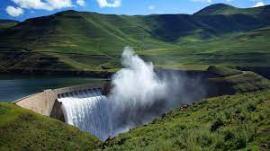
The bridge, constructed as part of Phase II of the Lesotho Highlands Water Project (LHWP), restores and safeguards connectivity for communities once the Polihali Reservoir is impounded. But its deeper significance lies in what it symbolises: a mature, treaty‑based approach to regional development, rooted in shared benefit, legal certainty and long‑term planning.
At the heart of the LHWP is the Treaty on the Lesotho Highlands Water Project, signed on 24 October 1986 between the Governments of South Africa and Lesotho. Far from being a once‑off agreement, the Treaty established a permanent framework for cooperation, defining roles, responsibilities, governance systems, cost‑sharing arrangements and dispute‑resolution mechanisms.
Through this Treaty and its accompanying Protocols, the two countries jointly committed to:
-
the equitable use of the Senqu/Orange River system,
-
the delivery of high‑quality water to South Africa, particularly to Gauteng,
-
hydropower generation and economic development in Lesotho, and
-
shared responsibility for social and environmental impacts arising from large‑scale infrastructure.
The Senqu Bridge stands out as a flagship example of people-centred development, embodying a holistic approach that integrates skills transfer, road infrastructure development, service delivery, local procurement, and livelihood restoration, in line with the provisions of the Treaty and the Phase II Agreement.
Furthermore,while the LHWP is unique in scale and longevity, it is not an anomaly. The Treaty explicitly recognises that water resources in Southern Africa are shared, transboundary assets whose sustainable use requires cooperation, not unilateral action.
The LHWP therefore stands as one example among many bilateral and regional arrangements through which neighbouring countries collaborate on bulk water supply, river basin management and infrastructure development.
What distinguishes the South Africa–Lesotho cooperation is its depth and durability: a multi‑decade legal framework supported by detailed protocols on royalties, cost apportionment, taxation, governance and dispute settlement.
In an increasingly water‑scarce region, such arrangements matter. They demonstrate that water diplomacy can be developmental, delivering mutual gains and uplifting both countries.
In addition to this, the Project’s governance model, centred on the Lesotho Highlands Water Commission, the Lesotho Highlands Development Authority, and South Africa’s Trans‑Caledon Tunnel Authority, ensures joint oversight and accountability. Cost allocation, royalties and financing responsibilities are clearly delineated through legally binding instruments, reducing uncertainty and reinforcing trust.
For South Africa, the benefits include secure, gravity‑fed water supply to its economic heartland at lower long‑term pumping costs. For Lesotho, the Project delivers hydropower generation, infrastructure investment, royalties, employment and skills development.
These benefits are commendable as they demonstrate the effectiveness of the treaty.
Over and above, the Senqu Bridge remains a key achievement worth celebrating in the SADC Regional Cooperation. As vehicles cross the bridge for the first time, they do so on a structure made possible by a shared vision forged four decades ago.
On the other hand, in a time when pressures on water resources are intensifying across Southern Africa, the LHWP and milestones like the Senqu Bridge, offer an important lesson. When neighbouring states embed cooperation in law, institutions and long‑term planning, infrastructure can become more than concrete and steel. It can become a bridge between national interests, carrying shared prosperity into the future.
*David Jacobs is Chief Director: Cluster Communication and Stakeholder Management at the Government Communication and Information System (GCIS).


