


South Africans have been urged to pay close attention to official weather warnings and prepare early as El Niño conditions raise the risk of extreme heat, reduced rainfall, water shortages, agricultural losses and veld fires.
The call follows seasonal outlooks from the South African Weather Service (SAWS), which indicate that El Niño is expected to influence the 2026/27 summer season and may bring warmer and drier conditions to many parts of the country.
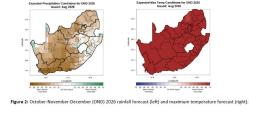
SAWS has warned that South Africa is likely to experience below-normal rainfall and above-normal temperatures this spring as a strong El Niño event develops in the Pacific Ocean.
SAWS said the latest predictions indicate that El Niño is likely to intensify further and could become the strongest event in living memory.
National Disaster Management Centre (NDMC) Director for Disaster Risk Assessment and Early Warning, Pumeza Tyali, said forecasts should not remain technical information, but must be turned into practical action that reaches communities before hazards become disasters.
“As the National Disaster Management Centre, we are continuously coordinating efforts to bring resilience in our communities, and we are continuously monitoring the risks that are associated with El Niño.
“We are also enforcing the issues that are aligned with the disaster management legislation in coordinating the sectors to ensure they play the role that they are supposed to play and to mobilise national support,” Tyali said.
She said early risk monitoring, contingency planning and coordination between national, provincial and local disaster management structures will be critical to reducing vulnerability during the season.
Possible impacts include pressure on water security, crop and livestock production, health services and emergency response systems. Communities may also face heat-related illness, veld fires and socio-economic pressure if dry conditions affect food production.
“Preparedness must begin before the impacts are felt. This includes tracking hazards, identifying exposed areas, reviewing contingency plans and ensuring that warnings lead to practical measures on the ground.
“Water and sanitation authorities are monitoring demand management and planning for possible drought conditions, while the agriculture sector is supporting farmers with timely advisories on crops, livestock, water availability and food security risks,” Tyali said.
The health sector is also strengthening readiness, including surveillance for water-related diseases and other community health concerns that may arise during periods of high temperatures and reduced rainfall.
“Provincial and local disaster management centres, together with fire and emergency services, are preparing through fire readiness measures, contingency plans, awareness campaigns and public information programmes,” she said.
Tyali emphasised that disaster management is a shared responsibility and that local risk assessments should guide decisions, even as national forecasts provide direction for planning.
The public has been urged not to panic or assume that disaster is inevitable, but to stay informed through official channels and respond promptly when warnings are issued.
The centre also called on the media to help translate technical weather information into accessible language, counter misinformation and keep the focus on preparedness before emergencies occur.
“Please help us to turn this information into action,” the centre said, adding that early planning, coordinated response and clear communication can help protect lives, livelihoods and essential services during the season.
Seasonal forecast
SAWS’ latest seasonal forecast for October to December 2026 indicates that below-normal rainfall is the most likely outcome over most of South Africa.
The period is also very likely to be marked by above-normal temperatures.
“The rainfall and temperature forecast for November 2026 to January 2027 is very similar to that for October to December 2026, with drier and warmer conditions over most of the country the most likely outcome.
“It should be noted that the expected very strong 2026/27 El Niño event, combined with global warming, will likely result in 2027 being the warmest year ever recorded. The 2015/16 very strong El Niño event brought unprecedented heatwaves to the southern African region,” the weather service said.
SAWS added that the southern African region has continued to warm up in the 11 years since then.
“If the 2026/27 El Niño event brings the expected below-normal rainfall to southern Africa, heatwaves are likely to occur more frequently.
“These heatwaves have the potential to be severe. However, as current forecasts indicate the potential for an exceptionally strong El Niño, uncertainty remains about its eventual strength and regional impacts.
“For this reason, the extent of expected heatwaves and water scarcity associated with the event will be closely monitored and communicated to disaster management structures, weather-sensitive industries, the media and the public,” SAWS said.
The weather service has advised the public and weather-sensitive industries to follow monthly seasonal forecast updates and daily short-term weather forecasts to prepare for heatwave conditions and other high-impact weather events. - SAnews.gov.za


