


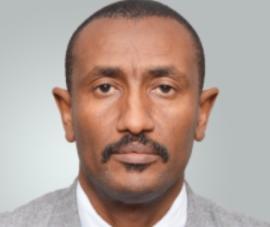
Africa Energy Commission Executive Director, Rashid Ali Abdallah, has welcomed South Africa’s proposal – through the G20 Presidency legacy programme – to establish an energy efficiency facility.
He was delivering remarks on the sidelines of the third G20 Energy Transitions Working Group (ETWG) meeting in the North West this week.
Abdallah highlighted that for the African Union, energy efficiency is “at the core” of the development agenda through the African Energy Efficiency Strategy – which, amongst others, has set a target to increase energy productivity over the next 25 years.
“To achieve African Energy Productivity target and contribute to the global doubling [of] energy efficiency by 2030… the continent needs access to sustainable finance and a strong coordination of the institutional framework with good human capacity.
“It is for this reason that we welcome the proposal by the South African G20 Presidency to establish an energy efficiency legacy programme. This decision not only compliments our work as the African Union but reinforces the role of energy efficiency in addressing the challenge of energy security and equality,” he said.
According to the United Nations Sustainable Development Group, some 600 million Africans still do not have access to electricity.
Abdallah noted the South African government’s pursuance energy security and access.
“This agenda is particularly relevant to Africa, as the continent is lagging in achieving the Sustainable Development Goal with over 70% of the population living in energy poverty.
“Access to renewable and affordable energy is essential to powering economies and powering essential services such as healthcare, clean water and education and improving living standards,” the Executive Director said.
He added that as the African continent continues to improve sectors, including health, education, water and food security, “the importance of energy efficiency cannot be overlooked”.
“Energy efficiency in Africa spans across all sectors. For example, 40% of utility in Africa Union states report electricity losses of over 20% – a stark contrast to the 6 to 10% seen in developed countries.
“By improving this deficiency, we can save a significant amount of investment on the generation and transmission infrastructure on the continent. This compliments the implementation of the African Single Electricity Market and Continental Power System Master Plan initiative being spearheaded by the African Union,” Abdallah explained.
Savings will also be extended to cash strapped households.
“For household appliances and equipment, market transformation not only saves money but also accelerates access of modern cooking.
“Adopting efficient lighting, modern transformer and cooling appliances has the potential to save African infrastructure investment equivalent to 40GW and more than US $20 billion in savings by 2040,” Abdallah said. - SAnews.gov.za


