


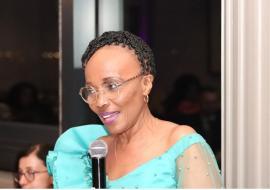
Minister in the Presidency for Women, Youth and Persons with Disabilities, Sindisiwe Chikunga, has warned that despite decades of progress, the global fight for gender equality continues to face deep-rooted and emerging challenges.
Speaking at the G20 Empowerment of Women Working Group (EWWG) Ministerial Meeting held at the Radisson Hotel and Convention Centre in Kempton Park on Friday, Chikunga described 2025 as both “special and challenging” for the global movement for gender equality.
“Three decades ago, women of the world travelled to Beijing—not as supplicants seeking charity, but as architects of our own liberation. We have come a long way, but profound challenges remain,” Chikunga said.
The Minister, who also chairs the G20 Empowerment of Women Working Group, highlighted the three key priorities, including paid and unpaid care work and household responsibilities; promoting financial inclusion of and for women; and gender-based violence and femicide, as the three major challenges that remain central to the group’s agenda under South Africa’s G20 Presidency.
“Throughout our deliberations, it became clear that these three priorities are not exclusive; they are mutually reinforcing,” she noted.
South Africa assumed the G20 Presidency under the theme “Solidarity, Equality, and Sustainability”, which Chikunga said reflects both the values of the South African Constitution and the continent’s growing role in shaping global policy.
“We are deeply pleased to have had the participation of the African Union and our sister African countries throughout this working group,” the Minister said, adding that the South African-led EWWG has already convened three major technical meetings to refine gender-focused policy proposals, which has received overwhelming support.
These included online and in-person sessions held between February and July 2025, drawing contributions from various international organisations, as well as civil society and private sector representatives.
Reflecting on the enduring global inequalities that women face, Chikunga cited former President Nelson Mandela, warning that legacy of oppression weighs heavily on women.
“As long as women are bound by poverty, and as long as they are looked down upon, human rights will lack substance. As long as outmoded ways of thinking prevent women from making a meaningful contribution to society, progress will be slow. As long as a nation refuses to acknowledge the equal role of more than half of itself, it is doomed to failure," she quoted.
Chikunga also extended gratitude to India and Brazil, the previous G20 Presidencies, for laying a strong foundation for the world to reimagine women's empowerment and sustainable development as a comprehensive, far-reaching, people-centred, indivisible, and interlinked paradigm. – SAnews.gov.za


