


For survivors of sexual violence, the trauma does not end when the abuse stops, but the prospect of recounting the experience in a courtroom, facing the criminal justice system and reliving painful memories, can become another deeply distressing part of their journey.
A survivor who has already experienced violence should never have to experience further trauma in pursuit of justice.
This is the principle behind the newly launched Khayelitsha Sexual Offences Court in the Western Cape, which aims to create a more supportive and sensitive environment for survivors of sexual violence as they navigate the justice system.
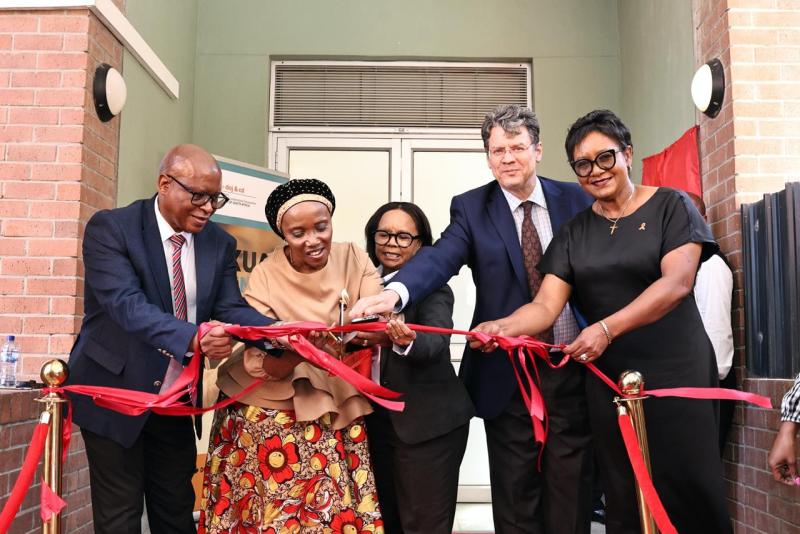
Minister in the Presidency for Women, Youth and Persons with Disabilities Sindisiwe Chikunga and Justice and Constitutional Development Deputy Minister Andries Nel officially opened the Khayelitsha Sexual Offences Court, strengthening access to justice, survivor protection and accountability.
Launched on Wednesday, 25 November, the first day of the 16 Days of Activism for No Violence Against Women and Children campaign, the specialised court is expected to ensure that survivors receive support before, during and after giving testimony.
Speaking at the launch, Chikunga said sexual violence is more than a criminal justice concern, but an assault on human dignity, personal freedom, equality, and the fundamental rights guaranteed by the country’s Constitution.
“Behind every reported sexual offence is a human being whose life, dignity, security and sense of safety may have been profoundly affected,” the Minister said.
The Khayelitsha court seeks to address this challenge through specialised services and facilities designed around the needs of survivors, particularly children, persons with disabilities, older persons and traumatised witnesses.
The court aims to reduce secondary victimisation; improve the management and turnaround time of sexual offences cases; strengthen the prosecution and adjudication of these matters; and ensure that survivors are treated with dignity, sensitivity and respect throughout the court process.
For a survivor, these interventions can make an important difference to the experience of seeking justice. Having a private space to wait, receiving emotional support, and being adequately prepared to testify can help reduce some of the anxiety associated with court proceedings.
Chikunga emphasised that children who have experienced sexual abuse require particular consideration, and they must never be made to feel responsible for the violence committed against them.
The court also seeks to remove barriers that may prevent persons with disabilities from accessing justice.
Under the applicable legal provisions, vulnerable witnesses may communicate their evidence through demonstrations, gestures and other forms of non-verbal expression, including communication devices.
Sign language testimony is also recognised, while guide dogs may accompany survivors with visual impairments.
The law further allows witnesses to testify virtually, giving survivors the option of providing evidence from an environment in which they feel emotionally safe.
Chikunga welcomed these provisions, saying the justice system must become more responsive to the needs of people who experience barriers to accessing its services.
“A survivor who has gone through this court must see that justice has been done, and must also feel that justice was served,” she said.
Justice closer to communities
The designation of the Khayelitsha Magistrates' Court as a sexual offences court is also significant in bringing specialised justice services closer to communities.
Chikunga said this is consistent with the country’s Constitutional imperative to ensure that access to justice is not determined by one's geographical location or economic circumstances.
The launch forms part of government's commitment to expand the number of sexual offences courts from 55 to 101, after government classified GBVF as a National Disaster last year.
Chikunga said the success of the initiative must be measured by the number of sexual offences courts established, but above all, by whether survivors experience a more accessible, responsive, caring, agile and effective justice system.
“Every sexual offence court must be supported by the necessary human resources, competent personnel, appropriate technology and an effective case management system. Every stakeholder must fulfil its mandate. Coordination cannot be optional when the safety, dignity and rights of our people are at stake,” Chikunga said.
She also called for stronger coordination among the police, the National Prosecuting Authority, and government departments responsible for health and social development, noting that the fight against sexual offences cannot be won by Justice and Constitutional Development, or the courts acting in isolation.
“It requires a coordinated and sustained response from all stakeholders within the criminal justice system. The South African Police Service must conduct thorough and timely investigations and promptly produce DNA reports to enable agile prosecution. Every police station must have a victim-friendly room where a survivor can give a statement without further trauma.
“The National Prosecuting Authority must thoroughly and skilfully prepare cases to achieve justice for survivors. The Department of Justice and Constitutional Development provides the necessary court infrastructure, specialised support services and administrative support,” the Minister said.
Government has allocated R186 million to strengthen forensic and investigative capacity. Recent national operational reports have also indicated that 404 dormant cases have been reactivated, and 317 life-imprisonment sentences have been secured.
This year’s 16 Days of Activism is observed under the theme: "Letsema: Men, Women, Boys and Girls Working Together to End Gender-Based Violence and Femicide".
As part of government’s broader response to GBVF, the Department of Justice and Constitutional Development continues to roll out specialised sexual offences courts across the country to strengthen support for survivors and build a more survivor-centred justice system. – SAnews.gov.za


