


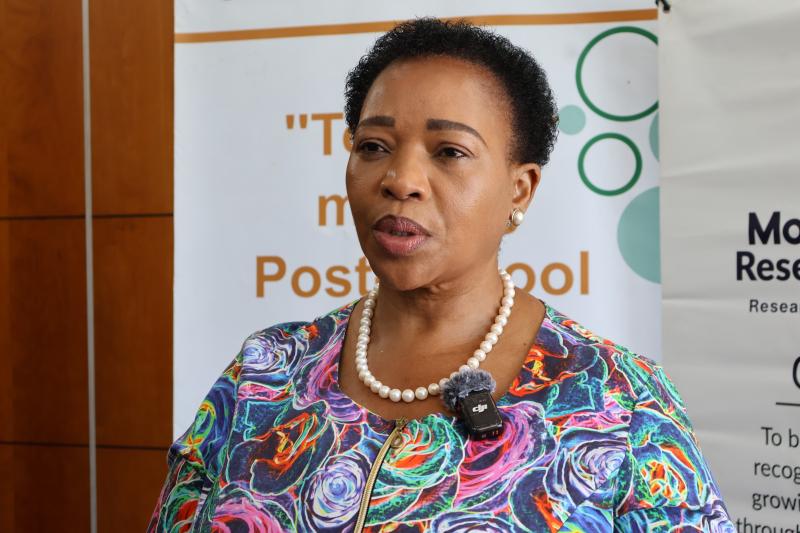
Deputy Minister of Higher Education and Training, Dr Nomusa Dube-Ncube, has called on the University of Zululand and Umfolozi TVET College to work together to develop skills for major investment projects in Richards Bay and the wider KwaZulu-Natal coastal economy.
The call comes as the Richards Bay Industrial Development Zone (RBIDZ) has an investment pipeline valued at an estimated R247 billion, with projects largely focused on gas, liquefied natural gas (LNG) and offshore wind.
Delivering the keynote address at the 2026 Rising Tides and Economic Futures Conference, hosted by the University of Zululand in Richards Bay, on Thursday, Dube-Ncube said local education institutions need to prepare young people to participate in the emerging industries rather than leave the opportunities to skilled workers from elsewhere.
“Will the people who build and run these projects come from KwaDlangezwa, Esikhawini and Mtubatuba, or from elsewhere because we did not prepare our own in time?”
She said the artisan who installs a wind turbine and the engineer who designs it belong to the same value chain, and universities and TVET colleges must train these skills as partners, not competitors.
“I encourage Umfolozi TVET College and this university’s Richards Bay campus to act as one blue economy skills cluster, serving the Sustainable Development Goals on decent work, climate action and life below water,” the Deputy Minister said.
Dube-Ncube said the transition towards greener industries and the growth of the ocean economy presents opportunities for the region, but these will only benefit local communities if education and training institutions respond to the skills requirements of industry.
She also called for stronger formal partnerships between universities, TVET colleges and special economic zones across KwaZulu-Natal.
The Deputy Minister said Richards Bay’s position as an industrial and port centre makes it important to link education and training more directly to economic development.
“With the Dube TradePort, the Richards Bay zone and two major ports, every zone in this province should be linked to a university and a TVET college through formal partnerships: industry seats on programme advisory committees, shared skills planning and structured workplace learning," Dube-Ncube said.
She also highlighted the province’s Secondary Cities Programme, which runs to 2056 and identifies Richards Bay as one of nine centres earmarked for development.
Dube-Ncube said local institutions do not need a directive from national government to establish relationships with businesses and industry players.
“Our institutions do not need a directive from Pretoria to pick up the telephone to a plant manager in Alton.”
She said higher education and training institutions also need to equip young people with the ability to adapt to changing economic conditions, including the shift towards renewable energy and other emerging sectors. – SAnews.gov.za


