

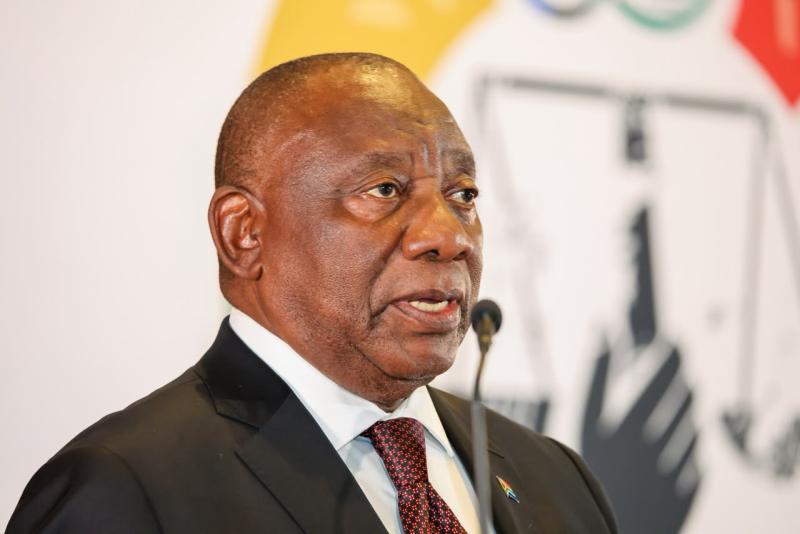
President Cyril Ramaphosa has emphasised the importance of justice systems that are accessible, responsive and centred on the needs of ordinary people, warning that justice that is inaccessible, delayed or reserved for the privileged undermines democracy.
The President addressed the International Conference on Access to Justice which kicked off at the Sun City Convention Centre in the North West on Thursday.
He emphasised the need to close the gap between the constitutional promise of justice and the lived experiences of ordinary people.
“Justice that is inaccessible is justice that is denied. And justice that is delayed, corrupted or reserved for the privileged undermines democracy itself,” President Ramaphosa said.
The conference is being held under the theme: Strengthening People-Centred Justice Systems: Deepening Democracy and brings together representatives of governments, the judiciary, international institutions, the legal profession and civil society from across the world.
Bridging the gap
President Ramaphosa noted that while South Africa will next month commemorate 30 years since the signing of its democratic Constitution, the existence of constitutional rights does not automatically guarantee that people could exercise them.
“A person may have the right to equality and yet experience discrimination. A person may have the right to dignity and yet endure violence and humiliation.
“A person may have the right to access the courts and yet be unable to afford a lawyer, travel to a courthouse or navigate complicated legal procedures,” the President stated.
He highlighted that the challenge is to ensure that the rights guaranteed by the Constitution translate into meaningful protection and redress for ordinary people.
Furthermore, access to justice should extend beyond the ability to approach a court and include the ability to understand one’s rights, obtain assistance, challenge abuses of power and secure effective remedies.
“A justice system must not only be open to the people. It must work for the people,” he said.
Overcoming poverty and digital barriers
President Ramaphosa identified poverty as one of the greatest obstacles to justice, explaining that it limits people’s choices, weakens their bargaining power and exposes them to exploitation.
He said government has a responsibility to ensure that justice systems are adequately resourced, efficient, independent and responsive.
This includes strengthening legal aid, supporting community-based legal services and making legal information accessible in languages and formats that people understand.
The President highlighted the role played by Legal Aid South Africa in providing legal representation to people who cannot afford it, as well as Equality Courts, community advice offices, civil society organisations and public interest legal practitioners.
He also pointed to the role of technology, digital services and alternative dispute resolution in reducing the cost and complexity of accessing justice.
However, he cautioned that technology must not create further barriers for people who are digitally excluded.
“Technology must not create a new divide between those who are digitally connected and those who are excluded,” the President stated.
Justice for all
President Ramaphosa further warned against allowing economic power to shield anyone from accountability, emphasising that the law must provide protection and redress regardless of where an injustice was committed by the State, a corporation, an employer, a financial institution or an individual.
“A society cannot be truly just when the ability to defend one’s rights is determined by the size of one’s bank account,” he said.
He called for stronger and independent courts, effective regulators, accessible complaints mechanisms, fair labour institutions and consumer protection authorities.
The President urged delegates to focus on three priorities during the conference:
- Making justice genuinely accessible to poor and vulnerable people;
- building independent, accountable and efficient justice institutions; and
- establishing meaningful ways of measuring whether justice systems are improving people’s lives.
He said this required looking beyond the number of cases processed by courts to consider how long people wait for justice, what it costs them, whether outcomes are fair and whether those outcomes are effectively enforced.
Additionally, the conference should produce a practical agenda for change, moving from declarations and commitments to measurable progress.
Renewing the promise of justice
Reflecting on the significance of hosting the gathering at Sun City, Ramaphosa noted that the venue had, during apartheid, become internationally associated with racial segregation and inequality.
“Today, representatives of nations and institutions from across the world are gathered here to advance justice, equality and human dignity,” he said.
President Ramaphosa said the transformation of the venue reflected how institutions and societies could change through courage, determination and solidarity.
As South Africa approaches the 30th anniversary of the Constitution, the President said the promise of justice, dignity and equality must be renewed through action every day.
“Justice must never be the privilege of the few. It must be the right and the lived experience of all,” he said. – SAnews.gov.za


