

President Cyril Ramaphosa has called on political parties to put the interests of communities ahead of political power and positions as they negotiate the formation of municipal governments following the 2026 Local Government Elections.
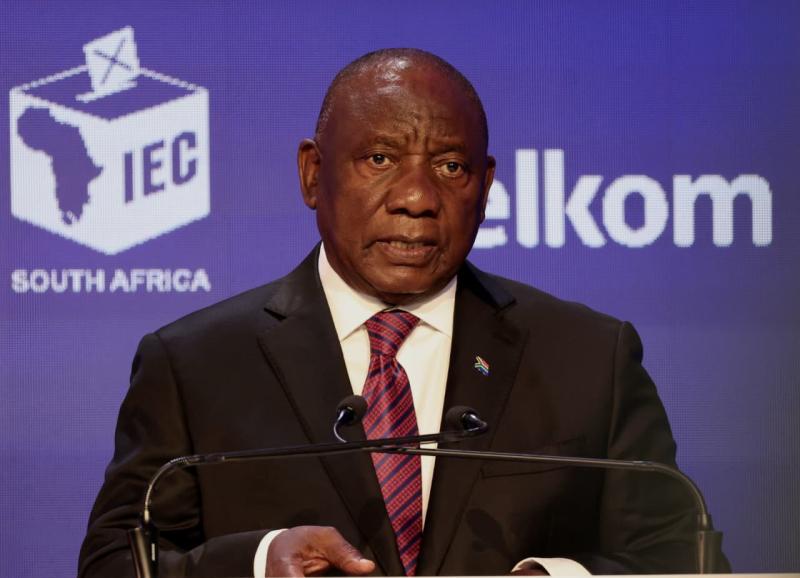
Addressing the announcement of the final election results at the Independent Electoral Commission (IEC) Results Operations Centre in Midrand on Sunday, the President cautioned that political disagreements must not undermine municipal stability or delay the delivery of essential services.
“In municipalities where no political party has secured an outright majority, the elected representatives will need to find common ground. This is not a weakness of democracy. It is an expression of the choices that the people have made.
“The voters have given their representatives a responsibility to work together, even where they differ,” he said.
The President said negotiations over the formation of municipal governments must be guided by the public good rather than contests over positions, privileges, or the distribution of power.
“The stability of our municipalities cannot be sacrificed to narrow political interests. The delivery of essential services cannot be held hostage by political disagreements.
“The people did not cast their votes so that their representatives could spend the next five years fighting among themselves. They voted because they expect their lives to improve,” he said.
President Ramaphosa said communities expected functioning councils, capable administrations and responsible leadership, urging political parties to rise above their differences and work together in the interests of residents.
He also called for councils to be constituted without delay, with parties negotiating in good faith to elect office-bearers and ensure that municipalities could begin their work.
“Budgets must be passed on time. Those elected must find common ground and work together.
“Together, we must make local government an engine of service delivery, development and opportunity,” he said.
The President congratulated newly elected councillors, reminding them that they would serve in the sphere of government closest to the daily lives of South Africans.
He said their responsibility extended beyond occupying positions in council chambers to listening to communities, responding to their needs and addressing concerns with honesty and integrity.
“It is to put the interests of residents above personal ambition and political advantage. And it is to remember, every day, that public office is a privilege that carries a duty of service.
“The election is now over. The work of serving the people must begin,” President Ramaphosa said.
He noted that the elections had taken place against the backdrop of considerable socioeconomic challenges, including the high cost of living, unemployment, particularly among young people, and inadequate municipal services in many communities.
South Africans, he said, wanted communities where they felt safe, public infrastructure was maintained, businesses could flourish, and young people had opportunities.
“They want jobs and opportunities. They want water to come out of the tap and electricity that works.
“They want their refuse collected, their parks maintained and their streets safe,” he said.
The President emphasised that elected public representatives would be judged by their ability to translate their election promises into tangible improvements in people's daily lives.
He said the revised White Paper on Local Government, which envisages significant changes to the way municipalities function and are managed, would provide a framework for strengthening the local government system.
The policy outlines measures to strengthen municipalities, improve their finances, direct resources towards infrastructure maintenance and ensure that services are delivered efficiently and reliably.
The President also reflected on the significance of the elections, which took place in a year marking 30 years since the Constitution was signed into law.
He said the participation of more than 540 political parties and nearly 137 000 candidates demonstrated the multi-party nature of South Africa's democracy.
At a time when democracy was under strain in many parts of the world, South Africans have once again demonstrated the strength and endurance of the country's democratic system.
President Ramaphosa said the authority to govern was entrusted by the people to those they elected and must always be exercised in their interests.
“The people have spoken. Their verdict must be respected. Their concerns must be heard. And their expectations must now be met. Let us work together to make local government work for every South African,” he said.
The 2026 Local Government Elections were held on Wednesday, 4 November 2026, with special voting taking place on 2 and 3 November 2026.
The final results were announced by the IEC at the Gallagher Convention Centre in Midrand on Sunday. – SAnews.gov.za


