


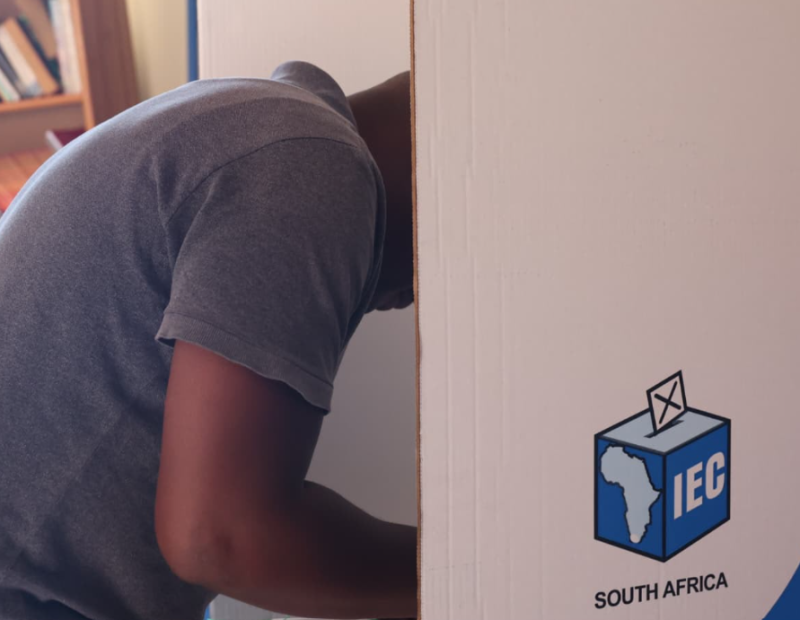
As South Africans prepare to head to the polls for the 2026 Local Government Elections, registered voters, who may not be available on Election Day, have already begun making their voices heard through the special voting process.
At Balebogeng Primary School in Mamelodi, Pretoria, voters who applied for special votes described the process as smooth and efficient, while encouraging young people to turn out in their numbers on Wednesday to help shape the future of their communities.
Speaking to SAnews.gov.za on day two of special voting, Peter Mamahlodi, from Mamelodi East, said he applied for a special vote because work commitments may prevent him from voting on Election Day.
“I applied for the special vote because I am busy. I will be working on the 4th and I might not get a chance to come and vote, so I felt the need to apply for a special vote because I wanted my voice to be heard,” he said.
Mamahlodi said he was pleased with how quickly the process was completed, adding that there were no queues at the voting station.
He said young people, in particular, should understand the importance of participating in elections, as the decisions made by elected leaders have a direct bearing on their future.
“I voted today because I feel it’s important for the youth to make their voices heard so that we can be the change we want to see. We want the people we vote in to come in and change things around and make life easy for us, as you can see the rate of unemployment is too high so we need people who will be able to come in and stimulate the economy to produce jobs for young people,” he said.
He urged young people not to limit their participation in raising community concerns to protests, but to also use their vote to influence change.
“I want to urge young people to come out in their numbers to vote on Wednesday. The future is in our hands ... We also want [young people] to be our future leaders and leadership starts with voting. The youth need to know and understand the process that leads up to changes. They can’t just protest in the streets but refuse to vote and make a change,” Mamahlodi said.
For 69-year-old Petrus Mtshweni, also from Mamelodi East, voting is an opportunity to elect leaders who will address unemployment, improve social support and tackle challenges affecting communities.
Mtshweni told SAnews that he wanted to see elected leaders create employment opportunities for young people, while ensuring that older citizens received better support.
“I applied for a special vote. I am voting because I want the party I voted for to win and be able to create employment for our children and for us old citizens to get an increase in grants,” he said.
He said municipalities need leaders who will prioritise the wellbeing of residents, particularly children and older people, while addressing social challenges.
“It is important to vote so that we can appoint the right people in our municipalities that will be able to bring in change to the challenges we are currently faced with. We want to see leaders who ensure that our children stay in school and the elderly are looked after, and also eradicate the scourge of nyaope in our communities,” Mtshweni said.
He described the voting process as a positive experience, particularly for older voters, who received assistance from election officials.
“The voting process was really nice, and the officials were really helpful, especially to us the elderly.”
Mtshweni also appealed to young people to take advantage of the opportunity to vote, saying their participation is important not only for their own future but also for older generations.
“I wish our young people can come out in their numbers to vote tomorrow so that their vote can make a difference. If they do not come out to vote, they are not doing any justice to their country and even to us the elderly.”
Meanwhile, IEC official Nomaqhala Madiseng* (not her real name) said the special voting process at the voting station had proceeded smoothly, with officials assisting both voters visiting the station and those receiving home visits.
“The process has been going smooth from the first day of special voting up until today. We had about 60 home visits and 83 special voters who were registered to come to the station physically. Up to now, we have serviced over 50 voters at the station, so we are going to finish up today,” she told SAnews.
Madiseng said officials had not encountered any challenges and were adequately prepared to assist voters.
“We have not experienced any challenges. We have everything that we need and we are able to assist the voters with the process as well. Those who have applied and are not able to make it will still be allowed to vote with everyone else on Wednesday,” she said.
Special voting across the country
A total of 2 655 067 voters were approved for special votes ahead of the 2026 Local Government Elections.
The special voting process caters for registered voters who may be unable to reach their voting stations due to physical infirmity or disability, as well as those who will not be available to vote at their registered voting stations on Election Day.
Of the approved voters, 678 525 will cast their ballots through home visits due to physical infirmity or disability, while 1 976 542 have been approved to vote at their registered voting stations.
KwaZulu-Natal recorded the highest number of approved home visits at 143 714, while Gauteng had the highest number of voting station-based special votes at 391 589.
Gauteng also recorded the highest overall number of approved special voters at 480 721, followed by the Eastern Cape with 401 971 and KwaZulu-Natal with 348 971. – SAnews.gov.za


