


By Neo Semono
Local government is not an abstract concept discussed in council chambers. Its impact is felt in whether refuse is collected each week or whether a burst pipe reported a few days ago has received the attention it needed.
As the country gets closer to the 2026 Local Government Elections (LGE) - set for Wednesday, 4 November 2026, SAnews.gov.za spoke to Thembelani Mazibuko, a researcher in the coalitions programme at the African Centre for the Constructive Resolution of Disputes (ACCORD), a civil society organisation.
ACCORD works to promote the constructive resolution of conflicts and disputes, contributing to peace, political stability and socio-economic recovery in Africa.
Mazibuko asserts that in some neighbourhoods, residents enjoy efficient services and quicker responses to concerns.
In other areas, however, particularly in poorer township communities, service delivery can be less efficient, leaving residents with a different experience of the very same municipality.
“So that is why I say, the state of local government is mixed,” he said, adding that the upcoming LGE provides an opportunity for citizens to elect representatives who will act in their interests and represent their communities when municipal council decisions are made.
“What you find is that municipalities which have strong economies like the City of Johannesburg, eThekwini, Cape Town and City of Tshwane have stronger economies and a stronger rates base. That is because they have businesses [operating in the cities]. They generally perform better than rural municipalities, which have a very limited rates base; very few businesses, and households' rates are lower,” he told SAnews.gov.za.
He said municipalities in rural areas often have smaller economies compared with those of their bigger counterparts.
“The shadow of apartheid still looms, as municipalities in the former homelands continue to struggle even today’,” he told SAnews.gov.za.
Mazibuko cited the Eastern Cape, home to the former homelands of Ciskei and Transkei, as an example of a province that continues to face challenges associated with this legacy. Gauteng and the Western Cape, on the other hand, which have no former homelands, generally have stronger economies and institutions that contribute to their municipal rates base.
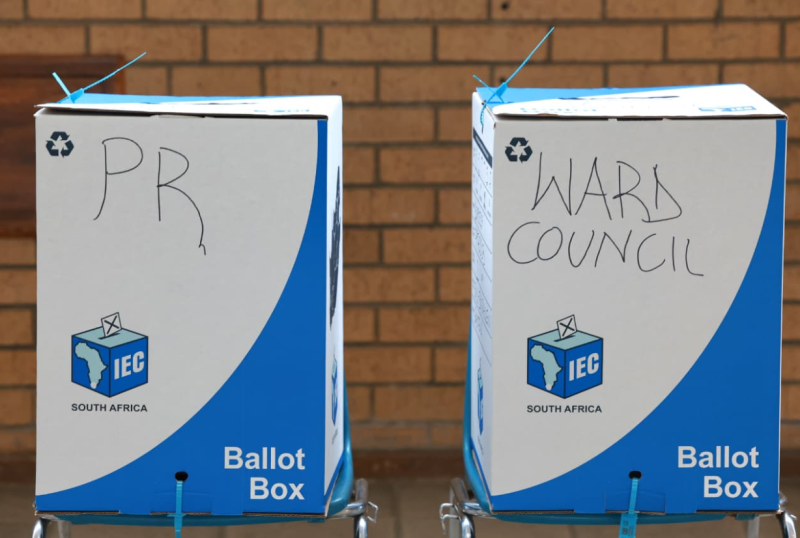
The elections therefore present an opportunity for voters to decide who should speak on their behalf in municipal councils, thus shaping decisions that affect their daily lives.
How local government works
For registered voters who are unsure about how local government works, it is important to understand that South Africa has three spheres of government - each with its own set of responsibilities. Local government is responsible for services that people encounter in their everyday lives, while provincial government generally provides services such as healthcare, education and community services. National government deals with national issues.
Additionally, municipalities are divided into three categories. Category A municipalities are metropolitan municipalities, of which there are eight. Category B municipalities are local municipalities, while Category C municipalities are district municipalities that typically comprise between five and nine local municipalities and provide district-wide services, including bulk sanitation.
“Do most people understand the distinction? There seems to be a lot of conflation; for example, you see a lot of talk about immigration. Local government does not deal with issues of immigration. So, you’re seeing a lot of mis and disinformation spread about local government and you can see it filtering through to people as they tend to conflate the responsibilities of the different spheres of government,” he said.
He added that one of the most misunderstood roles in local government is that of a ward councillor.
Mazibuko explained that ward councillors are not directly responsible for carrying out municipal services, but rather for taking residents' concerns to the appropriate structures within the municipality.
Ward councillors, for example, do not personally fix potholes. Instead, they are expected to escalate complaints to the relevant municipal officials and structures responsible for addressing them.
If the municipality is overwhelmed by complaints or fails to act, it does not automatically mean the councillor has neglected their duties, provided the concern was escalated.
Ward councillors also establish ward committees, which can comprise up to 10 people and provide a channel for community concerns to be heard.
This makes the councillor an important first point of contact for residents navigating municipal structures.
Increased focus and turnout
On the importance of the LGE, Mazibuko said there has been an increased focus on these polls.
“Historically, local government have almost been a by-the-way election. Since 2016, we’ve seen a lot more emphasis; maybe you can argue that, that emphasis is as a result of the increasing political fragmentation and increasing contestation within the local government level. South Africans are paying more and more attention to it; also the media.”
However, voter turnout has continued to decline, suggesting that more work is needed to encourage South Africans to participate.
The 2021 LGE saw a further drop in voter turnout at 45.86% that year. The researcher pointed to the possible effects of the COVID-19 pandemic and voting arrangements that required people to vote at the station where they were registered, rather than at any voting station within their municipality.
Some voters may have been turned away under these arrangements.
Given South Africa’s history, in which access to the ballot has been particularly significant, the researcher argued that voting arrangements should not place unnecessary restrictions on citizens. He pointed out that South Africans are a highly mobile population, and greater flexibility could help ensure that as many people as possible can exercise their right to vote.
Mazibuko suggests that same-day voter registration is one possible reform the National Assembly could consider in the future.
“If you look at the 1994 elections, for example, people just turned out with their ID book and were allowed to vote, and that election was free and fair. We must be careful as a society not to put onerous restrictions on people, especially because South Africans … as a result of our history, are a highly transient people. We move around for jobs, for example, and therefore it is important to have a level of flexibility. It’s something that should be looked at to ensure that as many people as possible can vote,” he explained.
He said the Electoral Commission (IEC) integrates technology in administering elections through the use of the voter management device and voters being able to check their registration status online. He cautioned against online voting because of the risk of hacking.
He said that beyond the voting process itself, civic and voter education remain important in encouraging people to understand what is at stake in local government elections.
Youth participation
Young people are another important part of the electoral picture, but their participation remains concerning.
He noted that the youth generally vote at lower rates than other age groups. One possible reason is that people in their early to mid-20s have had fewer opportunities to register and vote than those in their 40s, who have experienced more voter registration periods.
As the clock ticks closer to local government election day, whether young voters will turn out in greater numbers remains to be seen.
The researcher believes more work is needed to encourage participation across all age groups and to get people excited about voting.
For young people, as for other voters, the decision should start with understanding the issues that matter to them and assessing which political parties offer commitments that speak to those concerns.
Mazibuko encouraged voters who have not yet decided whom to support to scrutinise party manifestos, as these provide an opportunity to examine a party's priorities and determine whether its proposals go hand-in-hand with the needs and interests of the community.
He also challenged the view that ideology has little place in local government, arguing that ideology informs government at every level.
The choice, therefore, involves more than simply selecting a name on a ballot paper. It requires voters to consider what political parties stand for and how their priorities relate to the future of their communities.
Post elections
Post the elections, Mazibuko expects an increase in hung councils, where no political party wins an outright majority, particularly in KwaZulu-Natal and Gauteng, as well as parts of Mpumalanga, the Free State, the Northern Cape and the southern Eastern Cape.
This would mean more coalition governments, requiring political parties to negotiate agreements to establish governing majorities.
He added that negotiations could take time, particularly when parties struggle to agree on who should become mayor. One also has to consider that legislation requires the first council meeting to take place within 14 days of the election results, which could possibly place pressure on parties to reach agreements.
Frequent changes in mayors have also raised questions over the impact of coalitions on service delivery.
However, he pointed out that municipal services are delivered by officials, including city managers, divisional heads and unit heads, who remain in place while political parties negotiate.
This as the Municipal Structures Amendment Bill, 2026, commonly known as the Coalition Bill, seeks to introduce a clear legislative framework for the formation and functioning of coalition governments in municipalities.
According to the Department of Cooperative Governance and Traditional Affairs (CoGTA), the proposed legislation seeks to move coalitions from informal political arrangements towards a regulated governance mechanism that promotes stability and accountability.
Under the Bill, coalition agreements must be in writing, submitted to the municipal manager and the MEC responsible for local government, and published in the Provincial Gazette. The Bill also seeks to strengthen municipal leadership by ensuring office bearers and committee chairpersons have the appropriate skills, experience, or qualifications to perform their responsibilities effectively, among others.
The proposed legislation, he said, remains at an early stage, with further work still needed.
Misinformation and disinformation
As voters prepare to make their choices, Mazibuko encouraged them to be alert to misinformation and disinformation, particularly as political information circulates through platforms such as WhatsApp, X and Facebook.
In its Electoral Code of Conduct on Countering Disinformation, the Electoral Commission defines disinformation as information that is false or misleading, shared by someone who knows it is not true – or has no reasonable basis for believing it is – with the intention of misleading voters or disrupting the election.
It is different from misinformation, which is false information shared without that intent, often because someone did not check before sharing information.
“So much of our communication is through WhatsApp; political information particularly, is over WhatsApp, X, Facebook, and these are easier to infiltrate in terms of bad actors who want to spread mis and disinformation. This is an issue the IEC is seized with,” he said.
The Commission recently entered into a partnership with Google, Meta, Microsoft, TikTok and non-profit organisation, Moxii Africa, to ensure the integrity of election information and counter disinformation ahead of the elections.
Ultimately, local government is about more than municipal structures, council meetings and political negotiations. It is about the decisions that shape the places where people live and the services they depend on.
From the efficiency of refuse removal to the response to a reported pothole, residents experience the consequences of municipal decisions in their everyday lives.
The ballot gives them an opportunity to choose who will represent their interests when those decisions are made.
For communities across South Africa, the challenge is to make that choice thoughtfully, and also to understand the responsibilities of those elected while remaining engaged in holding local government accountable. -SAnews.gov.za


