


By David Jacobs
South Africa faces a troubling contradiction. Despite having a productive agricultural sector and food available through domestic production and imports, many households still struggle to access adequate food.
According to Statistics South Africa’s 2025 General Household Survey, 22% of households considered their access to food inadequate or severely inadequate. The survey also found that 14.7% of individuals experienced hunger in 2025. These figures highlight a persistent challenge: the availability of food in the country does not automatically translate into food on every household’s table.
Food security exists when all people, at all times, have physical and economic access to sufficient, safe and nutritious food. However, food availability does not guarantee access, as unemployment, low household incomes and rising living costs can prevent families from affording the food they need.
Addressing food insecurity therefore requires more than increasing agricultural production; it also calls for measures that improve food distribution, affordability and households’ ability to supplement their food supplies.
South Africa must then solve this problem.
To supplement commercial and small-scale farming as solutions to food security, one opportunity lies in rediscovering the value of household farming and indigenous foods in the country’s approach to food security.
South Africa has a rich heritage of traditional crops, indigenous vegetables and locally available fruits that have sustained communities for generations. Foods such as umbila (maize), morogo or imifino (traditional leafy vegetables), pampoen (pumpkin), patats (sweet potatoes) and cowpeas have sustained generations.
These foods should not be viewed merely as remnants of traditional diets. They are a critical part of our food security and can offer a practical starting point for expanding household food production and improving access to fresh, nutritious food.
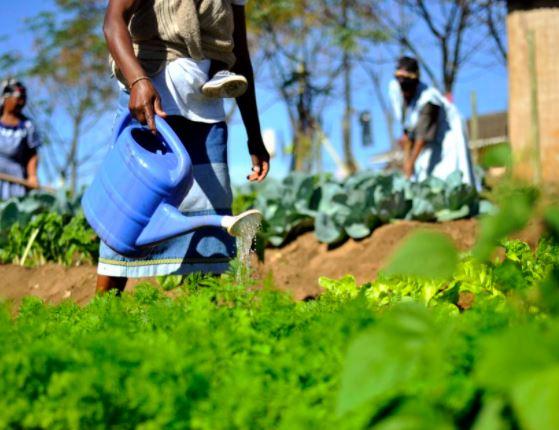
Household gardens, whether in rural villages, townships or urban neighbourhoods, can enable families to grow vegetables and other suitable crops for their own consumption, reducing some of the pressure on household food budgets. Where households have limited space, community gardens provide an opportunity for residents to work together, share resources and skills, and increase the amount of food available for families.
This is not merely an idea for the future. In Gauteng, community gardens have been documented in townships such as Sebokeng, Evaton, Sharpeville, Boipatong, and Tshepiso, In Cape Town, community gardens have also been documented in areas including Khayelitsha, Gugulethu and Nyanga. These initiatives are commendable and demonstrate how communities can turn available spaces into opportunities to grow food.
More South Africans should be encouraged to adopt this practice, whether by starting vegetable gardens in their backyards, balconies, rooftops, joining community gardens or finding innovative ways to grow food in limited spaces. This is particularly relevant in metropolitan areas, where the availability and cost of land can make traditional gardening difficult.
Cuba offers a useful example of how food production can be adapted to urban environments. Through its urban and suburban agriculture programmes, the country has encouraged the use of backyards, vacant plots and community gardens, alongside intensive growing methods such as raised-bed gardens. The experience highlights the value of combining local initiative with access to land, agricultural training and technical support.
South Africa can draw lessons from this approach while building on the foundation already established through its own initiatives.
Food production skills must also be passed from one generation to the next through families, community gardens, agricultural organisations and schools. Introducing food-growing activities in primary schools can equip children with practical skills, preserve traditional knowledge and encourage them to contribute to food security in their households and communities.
The Department of Basic Education’s School Food Garden Initiative, linked to the National School Nutrition Programme, provides a foundation for introducing children to food production from an early age. Introduced in 2004, the initiative gives learners opportunities to gain practical experience in agriculture. By giving learners practical experience in growing food and supplementing school meals with fresh produce, these gardens can help preserve food-growing skills across generations and contribute to the country’s long-term food security.
South Africa therefore should not overlook the power of household farming as a critical solution to the country’s food security. At the same time, there is a need for the government to strengthen support by providing households and community gardens with access to seeds, tools, water, suitable land, and practical agricultural guidance to help them grow food and contribute meaningfully to a food-secure nation.
*Jacobs is Chief Director: Cluster Communication at the Government Communication and Information System (GCIS)


