


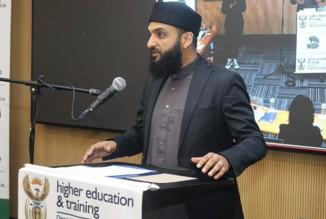
Higher Education and Training Deputy Minister Yusuf Cassim has called for expanded skills development opportunities in underserved communities through partnerships with Community Education and Training colleges and Community Learning Centres.
Delivering a keynote address at the at the Culture, Arts, Tourism, Hospitality and Sport Sector Education and Training Authority (CATHSSETA) Accounting Authority stakeholder engagement session in Cape Town on Thursday, Cassim said community-based training can help connect learners to economic opportunities in tourism, hospitality, cultural enterprises and small businesses, particularly in rural areas where formal employment opportunities are limited.
He said the opportunities created by skills development must also be accessible to South Africans who face geographical, financial and other barriers to participation.
“This is particularly important in rural communities and areas where formal employment opportunities are limited. Learners do not all have the same access to transport, technology, infrastructure, or proximity to employers. Our programmes must take these realities into account,” Cassim said.
The Deputy Minister called on CATHSSETA to explore practical models for collaboration that respond to local needs, noting that working with community education and training colleges and community learning centres can help extend the reach of skills development.
The Deputy Minister also called for training programmes to respond to changing skills requirements driven by digitalisation, artificial intelligence, and evolving consumer expectations.
In tourism and hospitality, digital marketing, online booking platforms and data analytics are changing how businesses operated, while conservation, arts, culture and heritage, as well as gaming and lotteries, faced emerging skills needs.
“The gaming and lotteries environment is also changing, increasing the importance of capabilities such as data analytics, cybersecurity, and digital platform compliance. This is why sector skills planning must be an ongoing exercise, informed by evidence and regular engagement with industry.
“Being future-fit does not mean abandoning foundational capabilities. Communication, critical thinking, leadership, problem-solving and customer service will remain essential. It means combining these foundations with the technical and digital skills that emerging working environments demand. – SAnews.gov.za


