

As South Africa marks Global Handwashing Day, Water and Sanitation Deputy Minister Jack Bloom has urged parents, teachers, and caregivers to promote handwashing with soap and clean water to help prevent disease and save lives.
Observed annually on 15 October, Global Handwashing Day is a global advocacy day dedicated to increasing awareness and understanding about the importance of handwashing with soap as an effective and affordable way to prevent diseases and save lives.
Keeping hands clean can help prevent diarrheal illnesses and respiratory infections, such as the common cold or flu.
Global Handwashing Day takes place with this year’s campaign continuing the multi-year theme: “Be a Handwashing Hero.”
The theme recognises the people who help make handwashing an everyday practice that protects health, while emphasising that everyone can play a role.
Everyone, from young children to senior business and government officials, can be a handwashing hero. Anyone who wants to see the benefits of good hand hygiene in their community or country can lead efforts in their workplaces, schools, and communities to champion clean hands for all.
Bloom said nearly 3 000 South African children under the age of five died from diarrhoea, influenza, and pneumonia in 2024, according to Statistics South Africa (Stats SA), an average of about eight children daily.
“Many of these deaths are preventable, and one of the most effective defenses is washing our hands with soap and clean water,” Bloom said.
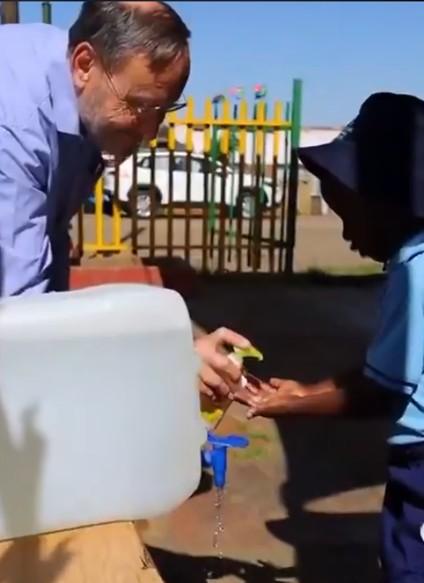
To promote handwashing among young children, the Deputy Minister visited Kido’s Educare Centre in Protea South, Soweto, where principal Julia Maseko demonstrated how to teach children the importance of hand hygiene.
International research by the United States Centres for Disease Control and Prevention shows that handwashing with soap can reduce diarrhoeal illness by 23% to 40% and respiratory illnesses by up to 21%.
UNICEF (United Nations Children's Fund) also reports that children who consistently wash their hands with soap after using the toilet and before eating can reduce their risk of diarrhoeal disease by more than 40%.
However, handwashing practices remain a concern in South Africa.
According to Stats SA’s General Household Survey 2024, only 54% of households wash their hands with soap and water after using the toilet.
A community survey in Soweto also found that households with inadequate hand hygiene were more likely to have experienced a bout of diarrhoea in the preceding two weeks.
Bloom urged parents, teachers, and caregivers to wash their hands with soap before eating, preparing food, or feeding children, and after using the toilet, changing nappies, working in the garden, or handling animals.
He also encouraged adults to teach children to practise proper hand hygiene from an early age.
“Be a Handwashing Hero because clean hands save lives!” he said. – SAnews.gov.za


