


The Department of Cooperative Governance and Traditional Affairs (CoGTA) has called for increased investment in disaster prevention and preparedness to protect communities from the growing impact of climate change and other hazards.
The call was made during the two-day national commemoration of International Day for Disaster Risk Reduction (IDDRR), which commenced in Mpumalanga on Tuesday.
The National Disaster Management Centre (NDMC), in collaboration with the Mpumalanga Provincial Government and strategic stakeholders, is hosting the event, which brings together approximately 500 participants from government, municipalities, traditional leadership, academia, civil society, humanitarian organisations and the private sector.
Speaking on the first day of the commemoration, CoGTA Director-General Mbulelo Tshangana said resilience must be built before disasters occur.
“Resilience begins when households and communities understand risks, participate in planning processes and take action to reduce vulnerabilities.”
Tshangana stressed the importance of integrating disaster risk reduction into development planning, service delivery and infrastructure investment, while strengthening early warning systems, municipal capacity, and community participation.
He also called for closer alignment between climate action and disaster risk reduction, with greater emphasis on prevention and preparedness investment, rather than responding only after disasters had occurred.
“Let us move from knowing risk to managing risk, from warning to early action, and from response to prevention. Together, we can build communities that are safer, stronger and more resilient,” he said.
Head of the NDMC, Dr Elias Sithole, called for stronger efforts to build South Africa’s resilience to disasters, climate change, and growing vulnerabilities.
“Resilience is the ability of communities, institutions and systems to anticipate risks, reduce vulnerabilities and recover in ways that support sustainable development,” Sithole said.
He noted that climate change, urbanisation and ageing infrastructure continue to increase disaster risks, placing local government at the forefront of disaster risk reduction, preparedness, and recovery.
“Municipalities remain at the forefront of building resilient communities. Strengthening local capacity, early warning systems and investment in prevention remains critical to protecting lives, livelihoods and development gains,” he said.
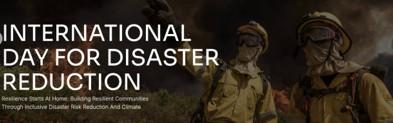
The 2026 commemoration is being held under the theme: “Resilience starts at home: Building Resilient Communities Through Inclusive Disaster Risk Reduction and Climate Action”.
The theme highlights the importance of empowering households and communities to anticipate, prepare for, respond to, and recover from disasters, particularly as climate variability, environmental degradation and socio-economic vulnerabilities intensify existing risks.
Observed annually on 13 October, International Day for Disaster Risk Reduction promotes public awareness of disaster risks and encourages action to strengthen preparedness and build resilient communities.
The commemoration comes amid growing risks associated with floods, droughts, veld fires, severe storms and extreme temperatures, which continue to threaten lives, livelihoods, infrastructure, and economic activity.
The national programme includes a technical practitioners’ session on Tuesday, followed by the political commemoration on Wednesday, which will be led by CoGTA Minister Velenkosini Hlabisa.
The event also seeks to strengthen collaboration between government, communities, academia, civil society and the private sector in line with the Sendai Framework for Disaster Risk Reduction 2015 – 2030, the Sustainable Development Goals, the Paris Agreement on climate change, the Disaster Management Act of 2002 and the National Disaster Management Framework.
The theme also aligns with Sustainable Development Goal 11, which promotes inclusive, safe, resilient and sustainable cities and human settlements, as well as the New Urban Agenda’s commitment to adequate, safe, and affordable housing.
Organisers expect the commemoration to strengthen public understanding of disaster and climate risks, promote inclusive participation in disaster risk reduction initiatives and reinforce the role of household preparedness, early warning systems and community action in protecting lives and livelihoods. – SAnews.gov.za


