


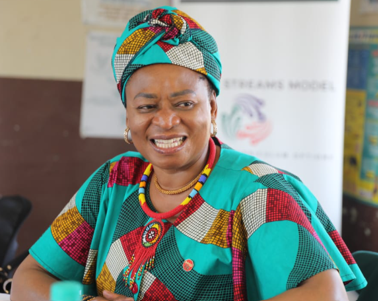
The Department of Basic Education has called for greater efforts to build girls’ confidence and leadership, while addressing barriers such as gender-based violence, teenage pregnancy and unequal opportunities in education.
Basic Education Deputy Minister Dr Reginah Mhaule made the call during the commemoration of the International Day of the Girl Child at Die Wilge Special School in Baillie Park, Potchefstroom, in the North West on Monday.
Speaking under the theme “Building Confident Leadership for Girls”, Mhaule said confidence was essential for girls’ participation in education and leadership, warning that social pressures could undermine their self-belief and ambitions.
“Confidence is not a luxury. It is a foundation for learning, participation and leadership,” she said.
The event brought together approximately 240 learners, educators, government representatives, development partners and community stakeholders. It followed learner dialogues and Dove Self-Esteem Project workshops held at schools across Potchefstroom the previous week.
Mhaule said the decision to host the commemoration at a special school highlighted the importance of including girls with special education needs in efforts to promote equality and leadership.
“That we gather at a special school today is not incidental. It reminds us that when we speak of the girl child, we must mean every girl, including girls with special education needs, whose voices are too often the last to be heard and whose leadership is too often the last to be imagined,” she said.
The International Day of the Girl Child is commemorated annually on 11 October to recognise girls’ rights and highlight the challenges they face.
Mhaule said girls continued to experience various barriers, including violence and harassment at home, in communities and at school, early and unintended pregnancy, poverty, inadequate access to menstrual health support and gender stereotypes that undermine the value of their education.
She also highlighted the impact of social media and online messaging on girls’ self-esteem.
“These pressures do something very particular to girls. They chip away at confidence. A girl who once put up her hand in the Foundation Phase stops raising it in high school. A girl who once dreamed out loud of being an engineer, a judge or a President learns to keep that dream to herself,” the Deputy Minister said.
Mhaule said when girls lost confidence, their participation declined, limiting opportunities for their leadership potential to develop.
Removing barriers to girls’ education
The Deputy Minister said the department was working to create safe, caring and inclusive learning environments through its Care and Support for Teaching and Learning approach.
She said gender-transformative education was also helping the sector examine whether girls were treated equally in classrooms, on sports fields, in the curriculum and in the expectations placed on them.
The department’s interventions include the Sanitary Dignity Programme, the policy on the prevention and management of learner pregnancy, and initiatives aimed at preventing school-related gender-based violence.
These measures seek to ensure that girls can remain in school, access the support they need and learn in environments where their safety and dignity are protected.
However, Mhaule stressed that government policies alone could not build girls’ confidence, emphasising the importance of supportive relationships with educators, parents and community members.
“Confidence is built in relationships. It is built when an educator believes in a learner before she believes in herself. It is built when a parent listens. It is built when a girl sees a woman who looks like her, who comes from where she comes from, standing in a position of leadership,” she said.
She encouraged girls to recognise their leadership potential in everyday actions, including standing up against bullying, participating in learner representative councils, asking questions in class and persevering with their education.
“Leadership is not something you must wait to be given. You already lead when you speak up for a friend who is being bullied,” Mhaule told the learners.
She called on boys to support gender equality, saying harmful gender norms also affected them by discouraging emotional openness and help-seeking behaviour.
“If we want girls to be safe and confident, we must raise boys who are secure, caring and respectful,” she said.
The department commemorates both the International Day of the Girl Child and the International Day of the Boy Child as part of its efforts to promote gender equality and social cohesion.
Partnerships to strengthen self-esteem
Mhaule acknowledged the contribution of UNICEF South Africa, the Development Bank of Southern Africa (DBSA) and Unilever, through its Dove brand, in supporting the department’s initiatives.
She said the partnership with UNICEF, including the Gender Transformative Education Summit held last year during South Africa’s G20 year, had helped shift the basic education sector’s approach to gender empowerment in schools.
The DBSA has partnered with the department for three years on social initiatives, including the commemorations of the International Days of the Girl Child and the Boy Child.
Mhaule said the partnership also supported work in sanitation and early childhood development, including infrastructure interventions that improve the environments in which children learn and grow.
She thanked the DBSA for its contribution to the department’s social cohesion and nation-building agenda, highlighting the importance of collaboration in achieving sustainable social change.
The Deputy Minister also acknowledged the decade-long partnership between the department and Unilever through the Dove Self-Esteem Project, which aims to help young people develop confidence and positive self-belief.
This year, the partners are launching the Dove Self-Esteem Virtual Classroom to expand access to self-esteem support and reach learners beyond geographical limitations.
Mhaule said the initiative could help ensure that girls in rural schools had access to support similar to that available to learners in major cities.
Call to educators, parents and communities
In closing, Mhaule called on educators to identify girls who had become withdrawn and create opportunities for them to participate and lead.
She urged parents and caregivers to invest equally in the education of their daughters and sons, while calling on community, traditional and faith leaders, as well as local government, to help make schools and the routes leading to them safer.
“Our schools cannot be safe if the roads to them are not safe. Girls cannot be confident in communities that tolerate violence against women and children. We need you with us,” she said.
She also thanked artists and public figures who had volunteered their time to support the department’s social initiatives, including Miss South Africa Qhawekazi Mazaleni, who had pledged to prioritise education during her reign.
Mhaule said building girls’ confidence required sustained commitment from educators, families, communities, government and its partners.
“Every educator, parent and community leader has a role to play in building a generation of girls who know their worth, who believe in their potential and have the courage to lead.
“Because when a girl believes in herself, she doesn't only change her own future. She helps shape the future of our nation,” she said. – SAnews.gov.za


