


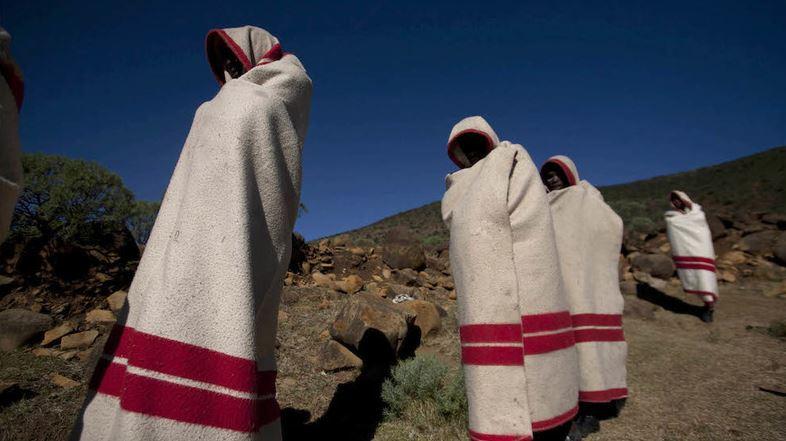
The National Department of Traditional Affairs and the North West Cooperative Governance and Traditional Affairs Department recently embarked on an awareness campaign to reinforce lawful traditional practices under the Customary Initiation Act of 2021.
According to Section 26 (02) of the Customary Act, registering an initiation school is mandatory. It must also be done at least three months before the commencement of the initiation season.
The programme was coordinated in preparation for the 2026 Summer Initiation Season, which commences on 6 November and 10 December for non-schooling and school-going initiates, respectively, with all initiation pass-out activities set to be concluded on or before 08 January 2027.
The campaign drew together various stakeholders in Mahikeng, including government departments, initiation practitioners, caregivers, parents and prospective initiates as part of efforts to achieve zero deaths and zero illegal initiation schools while strengthening awareness and promoting public participation.
North West Provincial Initiation Coordination Committee (PICC) Deputy Chairperson, Andries Stemmer, highlighted key provisions of the Customary Initiation Act that guide how customary initiation schools ought to function. These include the legal and health requirements, reporting of non-compliance, and responsibilities of all role players.
"The law provides for standardised processes from the application for permits through the PICC (Provincial Initiation Coordinating Committee), until the last phase when initiates return from the schools. This is done to deal with illegal and unregistered schools, and other unlawful activities that are key contributors to deaths, injuries and negligence in many instances,” Stemmer explained.
While applications are required by law to be signed by traditional authorities, Stemmer said registration is done through PICC structures only.
“This enables us to monitor the schools and ensure that all processes are above board."
Mahikeng has been identified as one of the hotspots of illegal initiation school operations, with cases of lawlessness including the kidnapping of children, fronting, and gangsterism.
The engagement session resolved to ensure active citizenry and a shared responsibility amongst all role players to uphold safer customary practices.
Speaking on behalf of the Mahikeng Initiation School Committee, Mamelani Tshabalala advocated for increased community involvement, particularly when addressing challenges in schools.
Tshabalala said the committee has identified bullying tendencies among learners who have undergone initiation towards those who have not.
“We therefore make a call to parents to assist the Department of Education in instilling high-level discipline at home and to become involved in the affairs of their children. We cannot build a future generation of leaders on a baseline of lawlessness and violence," Tshabalala said.
The National House of Traditional and Khoisan Leaders (NHTKL) Secretary, Abram Sithole, said local traditional leaders have a responsibility to ensure the preservation of culture and customs, placing much emphasis on intergenerational dialogue.
" Let us transfer indigenous knowledge through intergenerational engagements to share wisdom and ideas; this is how we can find each other. It is important to openly address critical issues such as gender-based violence and femicide and substance abuse that fuel problematic societal behaviour," Sithole said. – SAnews.gov.za


