


While progress has been made in education, skills development and youth employment initiatives, challenges around implementation, coordination, funding and accountability continue to limit outcomes for young people, according to the mid-term evaluation of the National Youth Policy 2020–2030.
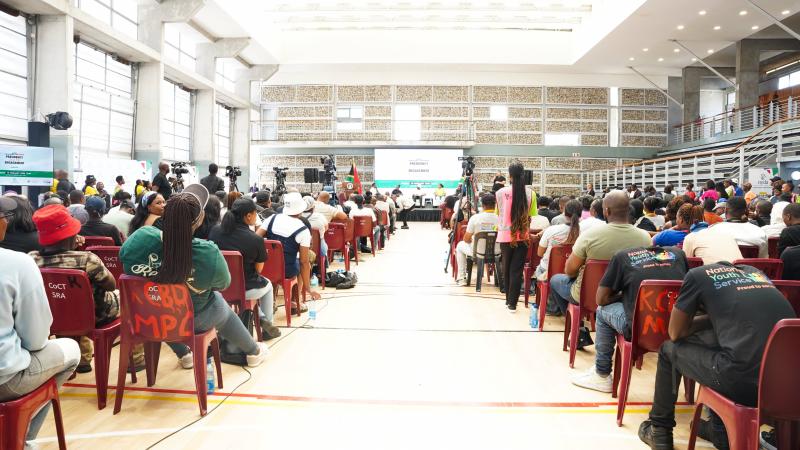
The findings were highlighted during the launch of the Mid-Term Implementation Evaluation Report of the National Youth Policy in Kempton Park, Johannesburg, on Friday.
Delivering a keynote address, Minister in the Presidency for Women, Youth and Persons with Disabilities Sindisiwe Chikunga said the evaluation confirmed that the policy remained relevant and aligned with the National Development Plan (NDP), Agenda 2063 and the United Nations Sustainable Development Goals (SDGs) but stressed the need to accelerate implementation to translate its objectives into meaningful opportunities for young people.
“The central finding of this evaluation is both encouraging and demanding. The National Youth Policy remains highly relevant… our challenge is no longer to restate that vision, but to translate it into consistent delivery at scale,” Chikunga said.
The evaluation recorded progress across all five pillars of the policy, including expanded access to education and skills development, the Presidential Youth Employment Initiative, the National Youth Service, and the SA-Youth platform.
However, Chikunga said these achievements need to be strengthened to ensure that education and training translated into economic participation, entrepreneurship and sustainable livelihoods.
“These achievements deserve recognition, but they must not become grounds for complacency. They must be the foundation on which we accelerate delivery,” the Minister said.
The evaluation comes amid persistent youth unemployment, with nearly 44% of young people not in employment, education, or training. Young women, particularly in rural communities, remain disproportionately affected by limited access to education and economic opportunities.
The findings also highlighted challenges facing young graduates seeking employment, young entrepreneurs struggling to access finance and markets, and young people experiencing poverty, substance abuse, violence and social exclusion.
The report further raised concerns about mental health and psychosocial wellbeing, noting that although interventions were in place, their reach remained uneven.
“Perhaps the most important conclusion of this evaluation is that South Africa does not suffer from a shortage of youth policies. Our principal challenge is implementation,” Chikunga said.
She noted institutional fragmentation, uneven service delivery, weak coordination, insufficient accountability, inconsistent monitoring and budgetary constraints as key obstacles to achieving the policy’s objectives.
As the country enters the second half of the policy’s implementation period, Chikunga outlined five priorities, including strengthening and adequately resourcing youth development institutions, institutionalising meaningful youth participation, expanding pathways into economic opportunities, prioritising youth wellbeing, and improving accountability for results.
The Minister also emphasised the need to strengthen the National Youth Development Agency (NYDA), describing it as a key link between national youth policy and the lived realities of young people.
“It [agency] must therefore be strengthened in governance, organisational capability, provincial and local reach, digital delivery, partnerships and monitoring capacity. Crucially, the NYDA must receive adequate, predictable and sustainable funding, aligned with a clear mandate and measurable outcomes, so that it can expand enterprise support, skills pathways, youth-service opportunities and access to information at the scale our national challenge demands,” the Minister said.
She said government and its partners need to expand new pathways into employment and entrepreneurship, particularly in the digital economy, artificial intelligence, creative industries, the green economy, agriculture, manufacturing and the oceans economy.
“This requires stronger transitions from learning to earning, procurement opportunities for youth-owned enterprises and partnerships that connect young people to capital, markets and mentorship.
The Minister further called for mental health services, psychosocial support, safer communities and community resilience to be prioritised as essential components of youth development.
She said institutions responsible for youth programmes need to strengthen monitoring and ensure that public funds are accounted for and translate into measurable improvements in young people’s lives.
Chikunga said youth development requires a coordinated effort involving government, business, educational institutions, civil society, development partners, families and young people themselves.
The launch of the evaluation coincides with the 50th anniversary of the 1976 Youth Uprisings, which Chikunga said served as a reminder of the role young people played in shaping South Africa’s history and the responsibility to ensure that the current generation had access to quality education, economic opportunities and safe communities.
Chikunga called for the evaluation to serve as a basis for a national compact that will move youth development from fragmented initiatives to coordinated delivery; from short-term interventions to sustainable pathways. – SAnews.gov.za


