


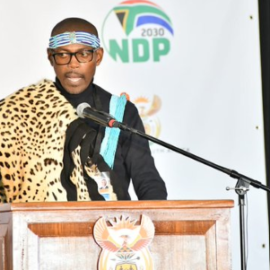
While heritage is often associated with traditional attire, music, food, dance and ceremonies, it extends far beyond these visible expressions of culture, said Deputy Chairperson of the National House of Traditional and Khoisan Leaders, Nkosi Langa Mavuso.
“It lives in our languages and place names, in clan histories and family histories, in sacred sites and graves, in indigenous farming and healing knowledge, in customary law, and in the values through which our communities cared for children and women, settled disputes and supported neighbours in times of need,” Mavuso said.
Speaking at the National Heritage Day celebrations ahead of President Cyril Ramaphosa’s address to the nation, Langa called for greater efforts to restore dignity, record oral histories, revitalise indigenous languages, protect sacred places and ensure meaningful participation by Khoi and San communities in decisions affecting their heritage.
The celebrations were held at the Bongolethu Sport Stadium in Oudtshoorn, Western Cape, on Thursday.
Mavuso also highlighted the constitutional protection of cultural and linguistic rights, noting that Sections 30 and 31 of the Constitution provide for the right to use a language and participate in the cultural life of one’s choice, as well as the rights of cultural, religious and linguistic communities to enjoy their culture together.
“These provisions must be viewed alongside the Constitution’s recognition of the institution, status and role of traditional leadership. These provisions belong together. They affirm that cultural identity and democratic citizenship can and must strengthen one another,” Mavuso said.
He further called for heritage to be viewed as a source of economic opportunity, particularly for young people and communities.
“Music, film, publishing, fashion, craft, cuisine, tourism and digital content can support our livelihoods. The National House therefore calls for partnerships that can turn cultural wealth into dignified local development.”
The Deputy Chairperson called for greater support for community museums and cultural centres, as well as training young people as heritage guides and archivists.
He emphasised that the responsibility of the current generation is not simply to preserve the past, but to ensure that heritage continues to provide meaning, dignity, opportunity and unity.
“Our responsibility is not merely to preserve the past; it is to carry forward what gives life, dignity and meaning, to correct what causes harm and to create a heritage that future generations can be proud of,” Mavuso said.
He said future generations should be able to look back and see that South Africans protected their languages, made room for every community in the country’s story and transformed the country’s cultural wealth into hope, opportunity and unity.
“Heritage Day belongs to every South African. It is therefore fitting that those who carry community memory, customary law, indigenous knowledge and living tradition should stand here as partners in shaping its meaning,” said Mavuso.
Mavuso said heritage is not only what South Africans inherited from previous generations, but also what they chose to protect, renew and pass on to future generations. He noted that while heritage is often associated with traditional attire, music, food, dance and ceremonies, it extends far beyond these visible expressions of culture.
Diversity is one of our greatest strengths
Held under the theme: “Celebrating Our Living Heritage: Strengthening the Ties That Bind Us”, the National Heritage Day celebrations at Oudtshoorn began with a tree-planting ceremony, setting the tone for a day dedicated to celebrating, protecting and passing on South Africa’s living heritage.
The Mayor of Oudtshoorn Municipality, Jan van der Ross, said the theme recognises that heritage does not only live in museums, monuments or history books, but in languages, faith, music, food and family stories.
He said Oudtshoorn and the surrounding region bring together diverse histories and traditions, including the heritage of the Khoi and San and the stories of communities shaped by the land and the contributions of generations of farm workers, artists, teachers, entrepreneurs, faith leaders and public servants.
“Our diversity is not something to fear or merely tolerate. It is one of our greatest strengths,” Van der Ross said.
He expressed appreciation to the Minister and the Department of Sport, Arts and Culture for entrusting Oudtshoorn with the national event, saying the municipality, communities and partners have responded positively despite receiving the invitation at short notice. – SAnews.gov.za


