


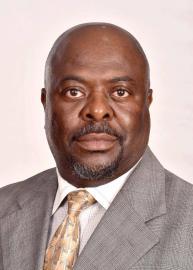
By William Baloyi
South Africa has built a world-class higher education system that has become a strategic national asset. Our universities are not only recognised among the best globally; they are centres of excellence that drive innovation, strengthen the economy, develop highly skilled graduates and contribute to global knowledge creation.
The growing international recognition of South Africa's universities is a story worth celebrating. It reflects the enduring vision of a society where education, knowledge and opportunity are powerful drivers of transformation and progress. This vision was central to the legacy of Nelson Mandela, who recognised education as one of the most important tools for empowering people and building a more equal society. Today, the strong performance of South African universities in respected global rankings is more than a source of national pride; it reflects the country's intellectual capital, capacity for innovation and ability to compete on the global stage.
As South Africa works to accelerate inclusive economic growth and create sustainable opportunities, the achievements of its universities serve as a powerful reminder that investing in knowledge is ultimately an investment in the nation's future. This is a story of excellence, innovation and national capability. It reflects the quality of scholarship, research and graduates that South Africa continues to produce, while demonstrating how universities are advancing practical solutions to some of the country's most pressing development priorities, from energy security and public health to food security, climate resilience and the future of work.
International rankings consistently place South African universities among the world's leading institutions. The University of the Witwatersrand (Wits) has emerged as Africa’s leading university in the 2026 Centre for World University Rankings (CWUR). This recognition reflects the university’s excellence in research, educational quality, faculty performance, and graduate employability, reinforcing the important role that South African universities play in advancing knowledge, innovation, and development across the continent and beyond.
The University of Cape Town (UCT) continues to receive global recognition for its academic excellence and research impact. In major international rankings, including the 2026/27 US News & World Report Best Global Universities rankings and the QS World University Rankings 2027, UCT is recognised as one of Africa’s highest-performing universities, reflecting its strength in research reputation, academic excellence, international collaboration and graduate outcomes. Together, these achievements demonstrate the depth of excellence within South Africa’s higher education sector and the ability of multiple institutions to compete among the world’s best.
The impact of South Africa's universities is perhaps best demonstrated through the groundbreaking research they produce, including the work of Wits University public health leader and vaccinologist, Professor Shabir A. Madhi, who has been recognised with one of the world's leading infectious disease honours. Professor Madhi will be receiving the 2026 Maxwell Finland Award for Scientific Achievement, a recognition that not only reflects hard work and dedication but also affirms the global significance of South African research in combatting some of the world's deadliest childhood diseases and pandemic threats.
Across the country, revolutionary breakthroughs are emerging through South African research as scholars develop practical solutions to some of the world's most pressing challenges. At the University of KwaZulu-Natal (UKZN), researchers are leading Africa's first HIV cure trial, which has shown promising results in enabling some participants to remain virally suppressed without lifelong antiretroviral therapy, a significant milestone in the global fight against HIV. UKZN researchers are also advancing innovative solutions to improve water quality through cutting-edge chemistry research aimed at removing harmful pollutants from wastewater.
Similar contributions are being made at Stellenbosch University, where researchers are advancing work in areas such as renewable energy, agriculture, biotechnology and health sciences. The university's efforts in developing innovative agricultural technologies, improving food security and advancing sustainable energy solutions demonstrate how research can respond to national priorities while addressing global challenges. Through collaboration with industry, government and international partners, Stellenbosch University continues to translate scientific knowledge into solutions that support economic development and improve livelihoods.
South Africa’s commitment to impactful research is equally evident at the University of Pretoria (UP), where researchers are making significant contributions in fields including veterinary science, agriculture, engineering and artificial intelligence. Through the development of solutions that strengthen food security, improve animal health, support disease prevention and advance technological innovation, UP demonstrates how higher education institutions can play a vital role in strengthening communities and building a more resilient economy.
The University of Cape Town is also contributing to solutions for one of South Africa’s most pressing challenges: energy security. Through its Energy Systems Research Group, UCT is conducting groundbreaking research that combines modelling, policy analysis and field-based studies to support evidence-based decision-making on energy transitions in South Africa and the broader region. This work assists policymakers, industry and communities in identifying pathways towards a more sustainable and reliable energy system.
UCT-led researchers have also made important advances in cancer research by studying how cancer cells change in ways that allow them to avoid detection by the immune system. This research could contribute to the development of new cancer treatments, early detection methods and vaccines, while demonstrating how South African scientists are contributing to global efforts to better understand and fight complex diseases.
The University of South Africa (UNISA) adds another important dimension to this story by demonstrating how open and distance learning can expand South Africa’s research capacity. In 2025, UNISA produced more than 550 doctoral graduates, highlighting the important role of accessible higher education in developing advanced skills, strengthening research capacity and producing the next generation of scholars and innovators. Each doctoral graduate represents new knowledge, innovation and future leadership that can contribute to South Africa, the continent and the world.
The global recognition of South Africa’s higher education excellence will reach another milestone when the University of Cape Town (UCT) hosts the Times Higher Education World Academic Summit from 29 September to 1 October 2026, marking the first time this prestigious gathering will be held on African soil.
Co-hosted with the University of Bristol, the summit will bring global leaders in higher education, research, policy, business and civil society to South Africa. It is a historic platform to showcase Africa’s contribution to global knowledge and to place South African scholarship at the centre of debates about inclusive, sustainable and future-ready societies.
As South Africa reflects on the remarkable achievements of its universities, we are reminded that education has always been at the heart of building a better society. Nelson Mandela understood that education is a powerful tool for transformation, one that unlocks human potential, expands opportunities and empowers generations to shape their own futures.
Today, South Africa’s universities are carrying this legacy forward. They are not only producing graduates and advancing knowledge; they are solving complex challenges, driving innovation and contributing to the development of a more inclusive and competitive nation. Their achievements demonstrate that South Africa has the talent, creativity and intellectual capacity to make meaningful contributions to the world.
The success of these institutions is the success of South Africa itself.
*Baloyi is the Deputy Spokesperson of the South African Government


