


As South Africans prepare to mark Mandela Day, the country has urged the global scientific community to ensure that research delivers tangible improvements in people's lives, particularly in developing nations facing poverty, unemployment and inequality.
As well as being observed as Mandela month, July also marks National Science Month in South Africa.
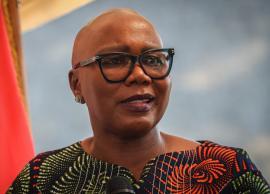
Speaking at UNESCO's 2026 Global Conference of the International Decade of Sciences for Sustainable Development in Paris, Deputy Minister of Science, Technology and Innovation, Dr Nomalungelo Gina, said science must move beyond producing evidence to driving practical solutions that improve livelihoods and strengthen public services.
Her message echoed former President Nelson Mandela's enduring belief that education, knowledge and innovation should be used to build a more just and equitable society.
"The decade is an opportunity to strengthen the bridge between evidence and implementation, especially for developing countries that require support for research infrastructure, skills development, data systems, technology transfer, innovation financing and institutional coordination," Gina said.
The three-day conference, which concludes on Friday, is assessing progress under the International Decade of Sciences for Sustainable Development (2024–2033), a UNESCO initiative aimed at strengthening the role of science in achieving sustainable development.
South Africa used the global platform to argue that scientific research should be embedded in government planning, budgeting and service delivery to help address pressing national challenges such as unemployment, food insecurity, climate change and inequality.
"For South Africa, this is urgent. Unemployment remains above 30%, food insecurity persists, and inequality remains high. These pressures affect households, communities, municipalities and the ability of the state to deliver," Gina told delegates during a high-level discussion on translating scientific evidence into action.
The appeal comes as South Africans commemorate International Mandela Day on Saturday, 18 July, which encourages citizens to dedicate time and resources to improving their communities.
This year's message from the Science, Technology and Innovation Ministry extends that principle to the global stage, arguing that scientific knowledge should also be a form of service by helping governments make better decisions and improve lives.
According to UNESCO's latest assessment of the Science Decade, 397 scientific initiatives have been endorsed across 79 countries, attracting more than US$50 million in confirmed funding and supporting all 17 United Nations Sustainable Development Goals.
However, the report also highlights significant disparities. Africa accounts for fewer than 10% of the initiatives despite representing 17.5% of the world's population. It also found that 40% of participating projects identified poor coordination, rather than funding, as the biggest obstacle to achieving impact.
South Africa acknowledged its own challenges, noting that the country's gross expenditure on research and development stands at 0.62% of Gross Domestic Product, underlining the need for greater investment and stronger coordination between research institutions and policymakers.
Gina cited South Africa's internationally recognised genomic surveillance during the COVID-19 pandemic as an example of how sustained investment in science can translate into effective public policy.
She said the country's experience demonstrated that scientific evidence only delivers results when backed by capable institutions, partnerships, public trust and efficient decision-making.
UNESCO Director-General, Dr Khaled El-Enany, said the challenge was no longer generating scientific knowledge but ensuring it benefits society.
"The world is not lacking scientific knowledge. What we need now are stronger systems to put that knowledge to work for people and the planet," he said. – SAnews.gov.za


