


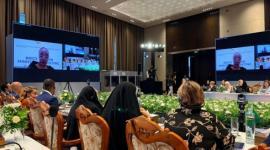
Minister in the Presidency for Women, Youth and Persons with Disabilities Sindisiwe Chikunga has called for a stronger BRICS partnership to accelerate women's economic empowerment, saying the bloc has the potential to become a global force for women-led development.
Addressing the BRICS Ministerial Meeting on Women's Affairs virtually on Wednesday, Chikunga said women's empowerment must be treated as a core driver of economic growth, innovation and sustainable development, rather than a narrow social policy issue.
“Our shared task is to ensure that women's empowerment is not treated as a narrow social policy issue, but as a central developmental imperative,” she said.
The BRICS grouping — comprising Brazil, Russia, India, China, South Africa and newer members Egypt, Ethiopia, Iran, Saudi Arabia and the United Arab Emirates — represents major emerging markets and developing countries, with a growing share of global economic output.
Across these countries, women are increasingly driving entrepreneurship, innovation, agriculture, digital services and community development, yet many still face barriers to finance, leadership opportunities, technology access and equal participation in the economy.
Chikunga said closer cooperation among BRICS nations is essential to eliminate these barriers, expand women's participation in leadership and decision-making, and improve access to finance, entrepreneurship, education and digital opportunities.
“Through the leadership of India [BRICS 2026 chair], we believe this platform will help us advance joint initiatives on women-led development – recognising women as leaders, entrepreneurs, innovators and drivers of sustainable change across our economies,” she said.
The Minister said the meeting's focus areas — governance and leadership, financial and digital inclusion, entrepreneurship and skills, climate action, food security and nutrition — are deeply interconnected and critical to achieving meaningful gender equality.
The BRICS Ministerial Meeting on Women's Affairs was established during South Africa's BRICS chairship in 2023 to create a dedicated platform for Member States to coordinate efforts on women's rights, economic empowerment and inclusive development. Since its establishment, the forum has become an important mechanism for sharing policy experiences and identifying practical ways to increase women's participation in the economy.
Expanding inclusion
Highlighting South Africa's own efforts, Chikunga said government is finalising a Women's Economic Assembly framework aimed at increasing women's representation in procurement structures, state-owned enterprise boards and decision-making bodies across both the public and private sectors.
She said the initiative is grounded in Section 9 of the Constitution and seeks to move women beyond consultative participation to meaningful representation and influence.
On financial inclusion, Chikunga said South Africa is advancing a Cooperative Banking Institution Initiative designed to help close the estimated US$1.7 trillion global financing gap faced by women entrepreneurs. The initiative aims to build a women-owned and women-controlled banking architecture that addresses challenges such as limited collateral, gender bias in lending and financial products that do not adequately serve women.
Chikunga also highlighted the role of social protection programmes, including the Child Support Grant, which reaches more than 13 million children, as well as the Older Persons Grant, Disability Grant and Social Relief of Distress Grant, which provide critical support to millions of women, who are the primary caregivers in many households.
Chikunga said the implementation of the Public Procurement Act, which sets aside 7% of public procurement opportunities for businesses owned by women, youth and persons with disabilities, is among the most ambitious empowerment interventions on the African continent.
“Women across BRICS countries are not only affected by developmental challenges, but are also key to solving them,” she said.
On climate change and food security, the Minister said Cabinet has adopted the Climate Change and Disability Impact Report and is integrating gender-responsive measures into climate adaptation, disaster response and food security programmes.
“The women of South Africa carry the burden of climate-driven food insecurity — and they must therefore be at the centre of the solution,” she said.
She added that women farmers, small-scale food producers and women working in the informal food economy are being placed at the centre of South Africa's response to climate-related challenges.
“South Africa stands ready to work with India and all BRICS member states to convert these commitments into measurable progress in the lives of women across our economies,” Chikunga said. – SAnews.gov.za


