


Government's wide-ranging and coordinated migration management strategy is aimed at strengthening border security, intensifying enforcement against illegal immigration, addressing asylum system backlogs, and closing legal and administrative gaps in the country’s immigration framework.
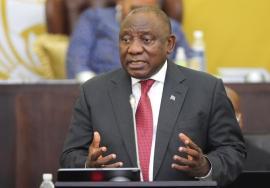
President Cyril Ramaphosa reiterated the measures taken by government to address issues relating to illegal immigration, while responding to oral questions in the National Council of Provinces (NCOP) on Thursday, reassuring that government had adopted a comprehensive approach to managing migration challenges.
He said illegal immigration has been identified as a significant national concern.
“The government has identified illegal immigration as a significant challenge in our country, which has implications for social cohesion, national security, and the provision of services to our people,” he said.
The President said Cabinet adopted a comprehensive migration management approach on 3 June 2026, which has since been endorsed through various governance structures, including the Presidential Coordinating Council, and engagements with social partners.
The first pillar of the strategy focuses on strengthened enforcement of immigration and labour laws.
“Law enforcement agencies are intensifying the identification and deportation of undocumented foreign nationals. This work will be supported by dedicated immigration courts,” he said.
He said compliance monitoring at workplaces will also be increased through inspections and stricter penalties for employers who violate immigration laws.
"The Department of Employment and Labor is recruiting 10 inspectors, as I announced in the State of the Nation address, and will increase penalties for employers breaching the immigration act,” he said.
The second pillar focuses on border management and infrastructure upgrades.
"We are directing resources to border infrastructure technology, as well as bringing in more personnel to guard our borders,” the President said.
President Ramaphosa said government will redevelop the country’s six busiest ports of entry, while refugee reception centres will be relocated closer to border posts to improve efficiency and control.
The third pillar of the approach is the modernisation and digitisation of the immigration system.
"We are establishing an intelligent population register with biometric data underpinned by a digital ID and phasing out the green ID books that enable identity theft,” he said.
He added that the electronic travel authorisation system will be expanded to all airports and major land ports of entry.
Government is also taking steps to address corruption and inefficiencies in the system through increased use of technology and data integration across departments.
The fourth pillar focuses on legal and policy reforms.
Cabinet has approved a revised White Paper on Citizenship, Immigration and Refugee Protection, which will guide a unified legal framework for migration management.
The National Labour Migration Policy and the Employment Services Amendment Bill are expected to introduce quotas for the employment of foreign nationals as part of efforts to regulate labour migration more effectively.
On asylum management, the President said government is working to resolve long-standing backlogs in the system.
"The Refugee Appeal Authority has recruited a number of advocates as additional adjudicators and continues to receive capacity support from the UN High Commission for Refugees to determine and finalize outstanding appeals,” he said.
The fifth pillar focuses on regional and continental cooperation, recognising that migration pressures cannot be addressed in isolation.
“South Africa cannot address migration alone through SADC, the African Union and bilateral relations that we have with many countries, we will work together to tackle political instability, conflict, and economic hardships that drive people to leave their homes and to come here,” he said.
President Ramaphosa emphasised that migration enforcement must remain a state function and warned against vigilantism.
“We've made it clear that every person within the borders must be here more. We have also said that responsibility for enforcing our laws rests with the state and the state law, and that no individual may stop any person to demand documentation or proof of identity or nationality,” he said.
He warned against discrimination and intolerance. The President said government remains prepared to deal with any attempts to destabilise the country.
“As government, as government, we have put in place security and other measures to deal with any attempts to destabilize our country, whether by citizens or foreign nationals, and we will not tolerate any attempts to destabilize the country by anyone, whether marching or otherwise."
“Our security forces are ready, and those who transgress the measures that we are putting in place will definitely meet the might of the law,” the President said.
On labour enforcement, President Ramaphosa said government will continue strengthening compliance mechanisms, including inspections and enforcement actions against exploitative practices.
He also addressed the recruitment of labour inspectors, confirming that government remains committed to deploying 10 000 inspectors announced in the State of the Nation Address, but said implementation will be phased due to fiscal constraints.
“Regarding immigration, we have determined that indeed we will be bringing in all those 10,000. We are doing it in phases. We're doing it in phases largely because of the budgetary concerns and restrictions that we have,” he said.
He said training will be prioritised to ensure inspectors are properly equipped for their responsibilities.
Responding to concerns over migrant deaths in the Northern Cape, the President expressed condolences and emphasised the need for humane treatment of all people within South Africa’s borders.
“As South Africans, we pay our condolences to their families and to the governments of their countries, and we want this whole process of immigration to be handled within the parameters of our law and as smoothly as possible, for they too are human, and as South Africans we must handle all these matters in accordance with our human rights culture and in accordance with our values,” the President said.
President Ramaphosa also noted that a number of undocumented migrants have opted for voluntary return processes.
“A number of them have opted to leave on a voluntary basis, and so therefore we are facilitating that almost 10,000 of them, particularly from Malawi, have opted to leave, and our officials are processing all that through the various reception centers in a number of our provinces,” the President said.
He added that government’s Justice, Crime Prevention and Security Cluster, through NatJoints, has developed contingency plans to respond to any potential unrest linked to migration enforcement operations.
The President concluded by stressing that migration reform must be balanced, lawful and coordinated across all spheres of government and regional partners. – SAnews.gov.za


