


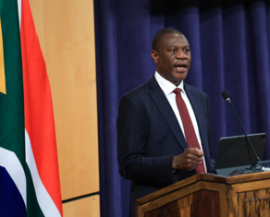
Deputy President Paul Mashatile has called for Africa’s cultural and natural heritage to be repositioned as a key driver of economic development, urging greater investment and stronger partnerships to unlock its full potential.
Delivering the keynote address at the 10th African World Heritage Day and the 20th anniversary of the African World Heritage Fund at the Development Bank of Southern Africa in Midrand on Tuesday, Mashatile said heritage must move beyond preservation and be integrated into broader economic planning.
“Heritage cannot exist in isolation, confined to the cultural sector. It must be integrated into broader development frameworks. It must speak the language of investment, sustainability, and economic growth. Let me be clear: heritage is an economic sector,” he said.
Mashatile emphasised that Africa’s heritage holds untapped value for tourism, job creation and local economic development, if managed and financed effectively.
“Across the continent, heritage sites drive tourism, support local enterprises, and create employment opportunities for guides, artisans, conservators, and entrepreneurs. When managed effectively and financed sustainably, heritage contributes to diversified local economies, strengthens national identity, and enhances Africa’s global competitiveness,” Mashatile said.
The Deputy President said the African World Heritage Fund represents a shift towards continental ownership and leadership in preserving Africa’s heritage.
“The World Heritage Fund is not just a financial instrument, but also a declaration that Africa must take ownership of its heritage and define its future,” he said.
Marking two decades since the establishment of the Fund, Mashatile highlighted progress made, including an increase in World Heritage sites on the continent and investments in capacity-building.
“Over the past two decades, we have achieved meaningful milestones. The number of World Heritage sites across Africa have increased significantly. Investments in capacity-building have grown, with thousands of professionals trained in conservation and heritage management,” the Deputy President said.
Despite these gains, he acknowledged ongoing challenges, including underfunding and limited representation of African sites on the global stage.
“Yet, we must also acknowledge the challenges that remain. Africa still accounts for a small proportion of the World Heritage List. Many sites remain underfunded or at risk, and several countries have yet to secure representation,” he said.
He described these gaps as a “call to action”, urging stakeholders to integrate heritage into development frameworks and prioritise sustainable financing.
“Heritage cannot exist in isolation, confined to the cultural sector. It must be integrated into broader development frameworks. It must speak the language of investment, sustainability, and economic growth,” the Deputy President said.
Mashatile called for strengthened collaboration between governments, development finance institutions, the private sector and communities, noting the role of institutions such as the DBSA in supporting heritage investment.
“This calls for stronger partnerships between governments, development finance institutions, the private sector, and communities. It requires innovation, responsiveness, and a shared commitment to ensuring that heritage delivers tangible social and economic benefits,” he said.
He also backed efforts to mobilise a US$25 million endowment fund to secure long-term support for heritage initiatives across the continent.
“Today, I therefore support a call for renewed commitment to the following: Mobilising the 25 million US dollar Endowment Fund of the African World Heritage Fund; strengthening partnerships with governments, finance institutions, and the private sector; reinforcing the Fund’s role as Africa’s central heritage mechanism,” he said.
Mashatile said the preservation of heritage is ultimately about safeguarding identity and building a legacy for future generations.
“History will judge us on how well we protect what has been entrusted to us, and on whether we have succeeded in passing it on stronger and more vibrant to future generations,” he said.
The event, held as part of Africa Month, brought together government leaders, development institutions, and heritage experts to reflect on progress and mobilise renewed investment in Africa’s cultural and natural assets.
“Let us ensure that it serves as a foundation for development, a source of dignity, and a pillar of unity across our continent,” Mashatile said. – SAnews.gov.za


