


By David Jacobs
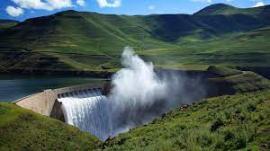
As South Africa confronts long-term water security challenges, few projects illustrate the power of regional cooperation as clearly as the Lesotho Highlands Water Project (LHWP). Rooted in a treaty signed between South Africa and the Kingdom of Lesotho in 1986, the LHWP stands as a flagship example of how shared natural resources can be harnessed for mutual benefit.
The project was conceived to secure reliable, high-quality water for South Africa—particularly Gauteng, the country’s economic heartland—while enabling Lesotho to generate hydropower, develop infrastructure, and unlock socio-economic opportunities. Importantly, the LHWP is not a unilateral intervention. It is a binational partnership, governed through shared institutions and implemented in phases to respond to growing demand and long-term sustainability.
Phase I of the project is already delivering 780 million cubic metres of water annually to South Africa through gravity-fed transfers that reduce energy costs and strengthen national water resilience. At the same time, Lesotho benefits from hydropower generation at the ’Muela Hydropower Station, infrastructure development, skills transfer, job creation and long-term royalties linked to water transfers.
Phase II deepens this cooperation. It includes the construction of the Polihali Dam and the Polihali–Katse Transfer Tunnel, which will increase water transfer volumes to 1 270 million cubic metres per annum. Enabling infrastructure such as the newly completed Senqu Bridge ensures uninterrupted access and connectivity for communities once the Polihali Reservoir is impounded, while also supporting economic participation and skills development.
Beyond water and energy, the LHWP demonstrates how regional partnerships—grounded in strong governance, fairness and shared responsibility—can deliver lasting development outcomes. As the project marks four decades of cooperation, it reminds us that sustainable solutions to complex challenges are achieved not in isolation, but through collaboration, trust and a shared vision for the future.
*David Jacobs is Chief Director: Cluster Communication and Stakeholder Management at the Government Communication and Information System (GCIS)


