


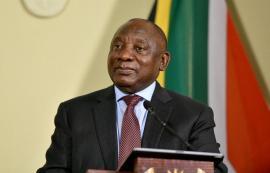
President Cyril Ramaphosa is set to preside over a significant land restitution milestone today as government hands over title deeds to communities in uMzimkhulu in KwaZulu-Natal.
The ceremony, to be held at the Esayidi Technical and Vocational Education and Training (TVET) College uMzimkhulu Campus, will see more than 17 000 hectares of land restored to four claimant groups -- the St Paul, Ngunjini, Ndzimankulu/Vierkant communities, and the Lawrence family.
The handover forms part of government’s ongoing land restitution programme under the Restitution of Land Rights Act, aimed at redressing historical dispossession caused by colonial and apartheid-era policies.
Led by Department of Land Reform and Rural Development Minister, Mzwanele Nyhontso, the initiative restores land rights to communities dispossessed after 1913, while also unlocking opportunities for economic development, particularly in commercial forestry.
The event coincides with Human Rights Month, observed this year under the theme: 'Bill of Rights at 30: Making Human Dignity Real', reinforcing the link between land ownership, dignity, and socio-economic inclusion.
KwaZulu-Natal Premier Thamsanqa Ntuli, alongside members of the Inter-Ministerial Committee on Land Reform, leadership from the Harry Gwala District Municipality and the uMzimkhulu Local Municipality, traditional leadership, as well as representatives from the Commission on Restitution of Land Rights will join the President at the ceremony.
Beyond restoring land ownership, the handover signals a broader shift towards sustainable post-settlement development, with beneficiaries supported through structured models aimed at improving livelihoods, reducing poverty, and strengthening local economies.
The Presidential handover is expected to underscore government’s commitment to accelerating land reform, while delivering tangible outcomes that restore not only land, but dignity and opportunity to affected communities.
“Land restitution remains a critical mechanism for addressing the injustices of the past by restoring access to land rights, including ownership and opportunities for sustainable development.
“This contributes to improved household welfare, economic growth, poverty alleviation, and a better quality of life for affected communities,” the Presidency said in a statement earlier this week. – SAnews.gov.za


