


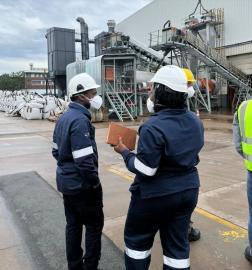
The eThekwini Municipality has intensified compliance inspections across the city to ensure that people living and working near hazardous operations remain safe and protected.
The municipality’s Fire Services Directorate and Environmental Health Division has ramped up enforcement through unannounced inspections, targeting high-risk facilities such as factories, major hazard installations and national key points.
The move comes amid growing concern over environmental and industrial risks, with authorities focusing on early intervention to prevent incidents before they impact residents.
The Fire Services Directorate, which operates a 24-hour emergency response service, is conducting proactive inspections to ensure compliance with fire safety regulations and emergency preparedness standards.
Its Emergency Planning Division is responsible for verifying that high-risk facilities maintain updated emergency response plans, clearly marked evacuation routes and functional fire safety equipment.
Fire Services Director Enock Mchunu said the inspections are aimed at identifying and addressing risks before they escalate.
“Community safety is our top priority. We are on the ground every day, proactively inspecting high-risk facilities, identifying unsafe conditions, and requiring immediate corrections before they pose a threat,” Mchunu said.
He warned that companies ignoring safety rules face severe penalties, including fines, shutdowns, or court orders where necessary.
The Environmental Health Division is conducting parallel inspections to ensure that environmental conditions do not pose risks to public health.
Guided by the National Health Act and Environmental Health Norms and Standards, practitioners follow a risk-based inspection model to target sectors such as high-risk industries, schools, food establishments, and public facilities, particularly those located near residential areas.
Inspection areas include chemical safety, water quality, pollution control, waste management, and monitoring of hazardous premises.
The municipality said common issues identified during inspections include outdated risk assessments, poor evacuation signage, expired fire equipment, and other hazardous conditions.
Depending on the severity of violations, officials may issue compliance notices, fines, prosecution directives, or order immediate closures.
Serious violations may lead to suspended permits or facility shutdowns.
Environmental Health Senior Manager Phumzile Vezi said compliance with safety and environmental regulations is not optional.
“Companies operating near communities must adopt strong safety standards and meet environmental laws. Our teams will continue to inspect, enforce, and re-inspect until risks are fully mitigated,” Vezi said.
The municipality said Fire Services and Environmental Health teams are working in a coordinated manner to ensure early detection of risks, rapid intervention, and continuous monitoring.
Follow-up inspections are scheduled based on risk levels, ranging from immediate revisits to intervals of 30, 60 and 90 days, and will continue until full compliance is achieved. – SAnews.gov.za


