


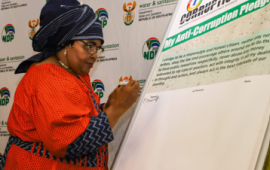
The Special Investigating Unit (SIU) and the Department of Water and Sanitation (DWS) have launched the Water Sector Anti-Corruption Forum (WSACF) aimed at strengthening the fight against corruption and safeguarding the country’s water resources.
The establishment of the forum follows findings from 16 SIU proclamations related to the DWS. Of these, nine investigations have been completed, while seven remain active, highlighting what authorities say is an urgent need for a coordinated anti-corruption response in water management.
The WSACF is anchored on Pillar Six of the National Anti-Corruption Strategy (NACS), which focuses on protecting vulnerable sectors and strengthening integrity systems. Through a risk-based approach, the forum will support investigations, prevention, and enforcement measures designed to protect South Africa’s water resources from corruption and mismanagement.
The initiative also aligns with the goals of the National Development Plan (NDP) 2030, which prioritises water security and sustainable development, as well as the United Nations Sustainable Development Goal (SDG) 6, which aims to ensure the availability and sustainable management of clean water and sanitation for all.
The forum aligns with what the NACS terms as a whole-of-society approach, which seeks to enhance and mobilise the inclusive participation of the public sector, private sector, civil society and academia to prevent and combat corruption.
Key objectives
The WSACF will focus on several key objectives, including supporting anti-corruption initiatives in the water sector, foster collaboration among stakeholders to combat corruption effectively, coordinate law enforcement efforts to enhance investigative capacity, and enhance investigative capacity.
It also aims to deliver tangible outcomes, including prosecutions, civil recoveries, and administrative actions against wrongdoing, while implementing preventative measures to mitigate fraud and corruption risks.
In addition, the forum seeks to promote accountability within anti-corruption agencies through multi-stakeholder oversight.
Coalition of stakeholders
The forum brings together a broad coalition of stakeholders, including law enforcement agencies, Chapter 9 institutions, civil society organisations, private sector representatives, government departments, and municipalities.
Other stakeholders include regulators, organised labour, traditional and religious leaders, and environmental and water conservation groups.
The SIU and DWS said this collaborative model strengthens accountability, closes gaps, and implements measurable and actionable prevention plans.
Importantly, the forum will also hold anti-corruption agencies accountable, ensuring transparency and effectiveness in their operations.
Building on existing anti-corruption efforts
The WSACF builds on the success of several sector-specific anti-corruption fora in recent years.
These include the Health Sector Anti-Corruption Forum, launched in October 2019; the Infrastructure and Built Environment Anti-Corruption Forum, launched in May 2021; the Local Government Anti-Corruption Forum, launched in September 2022, and the Border Management and Immigration Anti-Corruption Forum, launched in March 2025.
Acting Head of the SIU and chairperson of the WSACF, Leonard Lekgetho, said the forum comes at a critical time, as parts of the country continue to face water shortages.
“Water affects every living being, making it imperative for us to make fighting corruption in the sector a collective effort. The launch of the Water Sector Anti-Corruption Forum is a decisive step in protecting one of our nation’s most precious resources. Water is life, and corruption in this sector threatens not only service delivery but also the dignity and well-being of our people,” Lekgetho said.
He said the initiative sends a strong message that corruption in the water sector will not be tolerated.
“Through this forum, we are sending a clear message: corruption will not be tolerated, and those who undermine the integrity of our water systems will face the full might of the law.”
Water and Sanitation Minister Pemmy Majodina emphasised the importance of being proactive and strengthening anti-corruption efforts in the water sector.
“When corruption infiltrates the water sector, it does not simply distort procurement processes or inflate invoices. It dries up taps, delays infrastructure, contaminates rivers and erodes public trust.
“In a water-scarce country such as South Africa, corruption is not a victimless crime. It is a direct assault on human dignity and development. Every rand lost to corruption is a rand not spent on fixing leaks, expanding supply schemes, or protecting our freshwater ecosystems,” Majodina said. – SAnews.gov.za


