


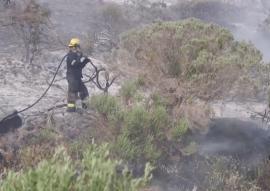
South Africa faces a complex and worsening fire risk environment, driven by rapid urbanisation, the rapid growth of informal settlements, expansion of the wildland–urban interface, climate variability, and uneven municipal capacity.
According to the Department of Cooperative Governance and Traditional Affairs (COGTA) fire incidents continue to result in devastating human, economic and infrastructural losses.
Year after year, South Africa records financial losses that exceed into billions of rands, a figure that excludes uninsured incidents and the long-term social impact on affected communities.
Against this backdrop, the National Disaster Management Centre (NDMC), under the COGTA, will this week host the annual National Fire Services Indaba, which will bring together key players in the fire and disaster management sector to discuss challenges and solutions for reducing fire risks in the country.
Convened annually by the NDMC, the Indaba seeks to strengthen coordination, policy alignment, and implementation across national, provincial, and municipal fire services.
The 2026 Indaba will take place at the President Hotel in Bloemfontein, Free State, from 26 to 27 February under the theme: “Building Resilient Communities: Collaborative Strategies for Fire Risk Reduction”.
The event is hosted in partnership with the Free State Department of COGTA and the Mangaung Metropolitan Municipality.
The two-day event will provide a dynamic platform for collaboration, innovation and knowledge-sharing, with discussions set to focus on critical vulnerabilities, emerging risks, and the evolving future of fire and disaster risk management in South Africa.
In a statement, the department said the Indaba supports a decisive shift from reactive fire response to a proactive, prevention-led, and predictive approach to fire risk reduction.
“This shift is anchored in the White Paper on Fire Services and aligned to the priorities of the National Development Plan (NDP), particularly those related to building safer communities, strengthening state capability, and improving disaster resilience,” the department said.
Key focus areas for the 2026 Indaba include:
• Enhancing intergovernmental coordination and mutual aid agreements.
• Improving fire risk profiling, early warning systems, and data-driven planning.
• Addressing fire risks in informal settlements and high-density areas.
• Advancing training standards, professionalisation, and compliance with national norms and standards. – SAnews.gov.za


