


As anticipation builds ahead of the State of the Nation Address (SONA), leaders from government, the science industry, media and business gathered at NASDAK in Cape Town for a pre-SONA media networking session that placed storytelling, social cohesion and national branding firmly in the spotlight.
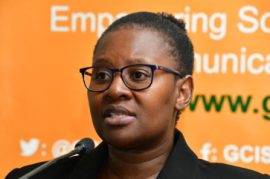
Framed around the theme: “Post-pandemic and elections: Media, social cohesion and national branding”, the panel discussion brought together Government Communication and Information System (GCIS) Acting Director-General Nomonde Mnukwa; Managing Director of the South African Radio Astronomy Observatory (SARAO), Pontsho Maruping; Chief Financial Officer at Kagiso Tiso Holdings, Tshepo Setshedi, and Managing Director of East Coast Radio, Mzuvele Mthethwa.
At the heart of the conversation was the pressing question: how can media help unite South Africans in a time marked by global uncertainty, rapid digital transformation and the aftershocks of both the pandemic and recent elections?
Media as a driver of social cohesion
Setting the tone of the engagement on Wednesday, Mnukwa underscored the powerful and regulated space in which South Africa’s media operates.
“When you look at the South African landscape, broadcasting and media occupy a significant space. We operate in a regulated environment, where we observe free speech and access to information, while ensuring balance, fairness and accountability.”
She highlighted how media can promote shared interests across race and geography, drawing on examples such as the “KZN Unite” campaign during the unrest in KwaZulu-Natal. Competing media houses aligned their messaging to focus on verified information and collective identity during the national crisis.
Similarly, during times of disaster and relief efforts, trusted platforms helped convert emotional responses into democratic participation, mobilising citizens across racial and social lines to contribute towards recovery efforts.
“These are examples of social capital and trust. Where there are events addressing common interests, media and government must come together to ensure social cohesion,” Mnukwa said.
Learning from science: Evidence, verification and trust
Bringing a scientific lens to the discussion, Maruping explained how the methods of science, hypothesis, testing, peer review and correction offer valuable lessons for media credibility.
“In science, you start with a hypothesis, you test it, you invite peer review and, if necessary, you correct it before presenting your findings.
“There’s a level of convergence with how people should trust media. Transparency about sources, evidence and verification builds confidence,” she said.
She argued that increasing transparency around how stories are verified, and allowing space for differing views grounded in evidence can strengthen public trust in journalism.
Maruping also made a passionate call for greater visibility of South African scientific excellence. From groundbreaking radio astronomy discoveries to advanced predictive election models developed by local scientists, she said the country’s innovation is often underreported domestically, even when it makes international front pages.
“I want South Africans to read about those stories and understand what they mean. If we can build the most sensitive radio telescope receivers in the world, what else can we do?”
Maruping said science can also play a vital role in combating misinformation by providing verifiable, non-political evidence to counter false claims.
Confronting misinformation in the digital age
The rise of social media and the speed at which misinformation spreads featured prominently in the discussion.
Mthethwa stressed that credible media houses cannot afford to be absent in digital spaces.
“Our job is to be present, driving the narrative that media can be credible and trusted. Accuracy is more important than speed. It’s not about breaking news first; it’s about breaking news that is accurate and truthful,” he said.
He called for stronger user education to help the public identify fake pages and unverified sources, while also urging commitment to ethical journalism and accountability across the industry.
Mnukwa reinforced the legal implications of spreading false information, reminding the audience that under the Cybercrimes Act, spreading misinformation is a criminal offence.
“Before you puff and pass, ask yourself: Is it true? Does it cause reputational damage?” she said, encouraging attendees to use their personal networks to raise awareness about responsible information sharing.
Mthethwa further proposed proactive measures such as incorporating social media literacy into school curricula to equip young people with the skills to navigate both the benefits and dangers of digital platforms.
Nation branding and patriotic storytelling
A significant portion of the conversation focused on South Africa’s national brand and the role media plays in shaping it.
Mnukwa outlined government’s recently approved Nation Brand Repositioning Strategy, describing it as a collective effort that requires participation from all South Africans.
“We have a country that belongs to all of us. It is the future of our children and the next generations, and therefore, it needs to be protected and preserved,” she said.
She urged citizens to differentiate between legitimate criticism of government and pride in the country itself.
“We compete as nations in Africa, in the global South and globally. We need to be proud of ourselves,” she said, noting that South Africa is globally recognised for its landscapes and democratic values, yet often underestimates its own strengths.
Nation branding, she added, is not merely a government communication exercise, but a platform to promote inclusivity, explain policy choices and foster patriotism grounded in democratic participation.
Setshedi emphasised the importance of cross-sector partnerships in strengthening democratic resilience. Reflecting on collaboration during COVID-19, he noted how media and government worked together to share life-saving information clearly and consistently.
Such partnerships, he suggested, will be equally important in ensuring smooth and credible electoral processes in future.
Storytelling as a unifying force
In closing remarks, panellists returned to a central theme: storytelling.
Maruping urged the media to “figure out how to tell good stories” and to be confident that audiences want to hear about progress, innovation and achievement.
Mthethwa described radio as “the original social media”, highlighting its long-standing role in fostering connection, conversation and community are values that remain critical in a fragmented digital age.
Mnukwa concluded with a call for stronger relationships between media, government, science and business to develop solutions that position South Africa as a world leader.
“I do believe that solutions will come from South Africa, as always,” she said.
As the country looks forward to SONA, the NASDAK discussion served as a timely reminder that beyond policy pronouncements and political debate, the power of narrative grounded in evidence, ethics and national pride remains central to building a cohesive and confident South Africa. – SAnews.gov.za


