


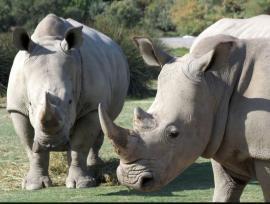
South Africa’s anti-poaching and anti-trafficking efforts have yielded a 16% overall decline in rhino poaching last year when compared to 2024.
This is according to the Minister of Forestry, Fisheries and the Environment, Willie Aucamp, who attributes the decline to dedication and tactical, swift coordination.
“From January to December 2025, 352 rhinos were poached in South Africa, with 266 being killed on State property and 86 on privately owned parks, reserves or farms. This was a decrease of 68 in comparison to 420 rhinos poached in 2024,” the Minister said on Tuesday in a statement.
Mpumalanga was the hardest hit province, with 178 rhinos lost during the reporting period. This was a notable increase from the 92 that were lost in 2024.
Most of the rhinos lost in Mpumalanga were in the Kruger National Park, which reported a total of 175 poached rhino last year.
This is an increase of 87 animals, which is more than the 88 reported in the Kruger National Park in 2024.
Rhino poaching numbers in the Hluhluwe-iMfolozi Park in KwaZulu-Natal (KZN) dropped from 198 in 2024 to 63 in 2025.
Ezemvelo KZN Wildlife attributed a significant reduction in poaching due to closer collaboration with rhino owners through the Integrated Wildlife Zones (IWZ) Programme, as well as sustained support from key conservation partners, including World Wildlife Fund (WWF), Save the Rhino International, Wildlife ACT, and Peace Parks Foundation (PPF).
“While Ezemvelo recognises that the strategic dehorning programme implemented in 2024 served as a critical catalyst in stabilising rhino poaching pressures and enabled urgent, targeted interventions, analysis of the 2025 outcomes confirms that multiple complementary interventions were central to the reduction in poaching incidents,” Aucamp said.
Key among these were enhanced detection and early-warning capability, achieved through the deployment and integration of advanced camera technologies and sensors.
The decline in rhino poaching has also been attributed to the implementation of the Integrity Implementation Plan, which included the successful polygraphing of all park law-enforcement personnel, reinforcing organisational integrity and public confidence.
“As we closely monitor implementation of the National Integrated Strategy to Combat Wildlife Trafficking (NISCWT), we continue to see some very good convictions in relation to rhino-related cases, with lengthy direct imprisonment terms, in respect of cases related to rhino crimes,” the Minister said.
The key efforts of the Director of Public Prosecutions (DPP) Environmental Working Group, which includes key prosecutors from around the country, are leading to more cases being handled together.
This means that those accused are being prosecuted for multiple cases at once, giving the court a complete picture of the criminal activities carried out by the groups involved, and allowing for a focus on organised crime and money laundering aspects of these cases.
“South Africa continues to strengthen its international collaboration to curbing rhino poaching and wildlife trafficking. These efforts led to the country receiving the Asia Environmental Enforcement Recognition of Excellence Award late last year, which celebrates excellence in enforcement by government officials, institutions and teams combatting transboundary environmental crimes.
“Working together with the South African anti-poaching and anti-trafficking organisations, we remain committed to a balanced, intelligence-driven, and partnership-based approach to rhino protection, recognising that sustained success requires constant adaptation, integrity, and cooperation across all sectors,” Aucamp said. - SAnews.gov.za


