


Africa’s mineral wealth is placing the continent at the centre of future industries, from clean energy to advanced manufacturing, as demand for critical minerals accelerates the global energy transition.
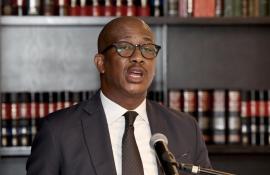
This is according to Deputy Minister in The Presidency Kenny Morolong, who was delivering the keynote address at Brand South Africa’s Investing in Africa Mining Indaba Welcome Reception Dinner held at The Capital Hotel in Cape Town on Sunday evening.
Held ahead of the official opening of the Mining Indaba on Monday, 09 February, Morolong said Africa is moving decisively from being a supplier of raw materials to becoming a global hub for industrial value addition, driven by clean energy technologies and advanced manufacturing.
“Our mobilising theme for this evening is industrialising Africa at scale, the role of strategic minerals, integrated infrastructure and continental policy, which speaks to a bold vision for our continent's future.”
He said minerals were the backbone of modern economies and would become even more critical as the world decarbonises.
“Wherever we are or come from in the world, metals and minerals are part of our daily lives. Minerals are a lifeblood of any modern and modernising society,” he said.
Morolong added that Africa now has an “unprecedented opportunity to move from being a mere supplier of raw materials to becoming a hub of industrial value addition and innovation.”
He said the demand outlook for critical minerals underscored the urgency of Africa’s industrialisation drive, noting that minerals such as lithium and rare earth elements would soon surpass fossil fuels in global value.
“These are the new oils of the 21st century.”
Morolong noted that demand for minerals such as rare earth elements and lithium is projected to nearly triple by 2030 and quadruple by 2040, while cumulative revenues from critical minerals between now and 2050 are expected to be more than three times greater than those from fossil fuels.
“In other words, these minerals, all of which are found beneath African soil, will be significantly valuable to the global economy than oil or gas in the coming decades.”
He said this global shift places Africa and South Africa in particular at the forefront of future industries.
“As [the] South African government, we see Africa as a continent on the cusp of transformation. South Africa is a proponent, and a gateway to a fully integrated African economy that will no longer be defined by trade in raw materials, but by the production of tertiary goods such as battery, solar panels in electronics and industrial products that will power the 21st century.
“We invite our partners and investors congregated here tonight, and the rest of the week, to join us on this journey of a long-term partnership and shared prosperity,” the Deputy Minister said.
Value addition
Morolong said African countries have already begun restricting the export of unprocessed critical minerals to ensure value addition takes place on the continent.
“What this says is that we Africans are no longer content to merely supply the inputs of industrial economies. It says we want to capture the downstream opportunities and build industries for ourselves in the global economy.”
This shift is supported by continental policy frameworks, including the African Union’s African Green Minerals Strategy adopted in 2024, which guides countries on harnessing critical minerals for industrialisation.
Improving the investment climate
Turning to South Africa’s mining sector, Morolong said mining remains a cornerstone of the economy and must be managed sustainably.
“Minerals and metals account for nearly half of South Africa's export by value, and mineral production is equivalent to about 10% of our GDP [Gross Domestic Product],” he said.
He said the government is implementing reforms to improve the investment climate, including streamlining licensing processes, addressing energy constraints and reforming logistics and port infrastructure.
“Government has raised [the] licensing threshold to encourage private power generation, enabling mining companies to invest in their own renewable energy plants.”
He stressed that infrastructure development remains central to Africa’s industrial ambitions.
“You cannot build a competitive and reliable industrial base without reliable power, good transport networks and efficient logistics,” he said.
Morolong also reaffirmed South Africa’s commitment to the African Continental Free Trade Area (AfCFTA), which he said would unlock economies of scale by creating a single African market valued at US$3.4 trillion.
“As we pursue growth through mining and industrialisation, we are keenly aware that our progress must be sustainable and inclusive,” he said, adding that developing human capital is essential to the continent’s industrial future.
He invited investors to partner with Africa on a long-term basis.
“We seek long-term partnerships that offer mutually beneficial outcomes, attractive returns for investors and sustainable development for our people,” Morolong said.
The reception, hosted by Brand South Africa, set the tone for the Mining Indaba 2026, bringing together global leaders, policymakers, investors and industry stakeholders ahead of a week of engagements under the theme: “Mining in Transformation: Fuelling Africa’s sustainable future.”
READ | Morolong to address Brand SA Mining Indaba reception
By convening senior government leaders, captains of industry, continental institutions and international investors, the reception positions Africa’s mineral resources at the centre of global conversations on industrialisation, infrastructure development and long-term socio-economic transformation. – SAnews.gov.za


