


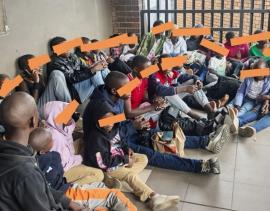
The Border Management Authority (BMA) has raised concern over the increasing number of unaccompanied minors intercepted at South Africa’s ports of entry during the 2025/2026 festive season.
BMA Commissioner, Dr Michael Masiapato, said officials recorded a notable increase in cases involving undocumented and unaccompanied children attempting to enter or exit South Africa illegally, during the 2025/2026 festive season.
At Beitbridge Port of Entry alone, about 53 unaccompanied minors were discovered and recorded - some of them as young as three years old.
In one particularly distressing incident, an 11-month-old baby was found abandoned at the border on 13 December 2025, while 15 minors were intercepted in mountainous areas at Lebombo Port of Entry attempting to illegally exit South Africa.
“Of serious concern was the interception of a Mozambican national, who attempted to smuggle a South African child to Mozambique. It was later discovered that the child was reported missing in Johannesburg, and the suspect was immediately arrested and referred to SAPS [South African Police Service] for further processing,” Masiapato said.
All cases involving unaccompanied minors were referred to the Department of Social Development (DSD) and the children were placed in safe care facilities, in line with domestic and international legislative prescripts on child protection.
In response to the growing challenge, the Commissioner said the BMA, together with the DSD, convened an urgent bilateral meeting with Zimbabwean authorities at the Zimbabwean Embassy.
The delegates at the meeting agreed to engage in collective awareness sessions targeting parents, including the joint screening of children prior to them being reunited with family members.
The Commissioner also commended the cooperation of bus operators in avoiding the transportation of undocumented travellers, particularly minors.
Agricultural and environmental bio-security
Masiapato said significant progress has been made in safeguarding South Africa against agricultural and environmental bio-security threats.
During the festive period, BMA biosecurity specialists managed to search over 369 703 pieces of luggage at various ports of entry. This led to the interception and destruction of unauthorised consignments, including more than 4 000 plants and plant products, fruit, chicken, dairy products, honey, beef, vegetable seeds, fresh spices, turkey meat, flowers and fresh leaves. All confiscated items were incinerated.
However, the Commissioner said the BMA continues to observe some travellers bringing unauthorised plants, animals and related products into the country.
“Despite all this, the BMA wishes to commend travellers who heeded the call to refrain from bringing alien invasive species, foreign pests and diseases, as well as regulated plant, animal and related products into South Africa outside the prescribed import processes,” he said.
Over one million screened
On Port Health matters, the Commissioner reported that the BMA team of health specialists screened about 1 361 270 travellers on arrival across ports of entry.
One set of human remains was also intercepted, prompting the immediate activation of the relevant health and forensic protocols.
Health inspections also detected several cases of fraudulent documentation, particularly among Angolan nationals attempting to depart South Africa using fraudulently acquired Emergency Travel Certificates (ETCs), as well as individuals attempting to enter the country using fraudulent Yellow Fever certificates.
“Given the various outbreaks of infectious and communicable diseases across the world, the Port Health team ensured the significant intensification of proactive public health and security measures. This period was marked by increased traveller movements, conveyance inspections, screening activities, and disease surveillance, confirming a substantial rise in traveller volumes across the world,” the Commissioner said.
Fifteen travellers were identified as sick on-board aircraft, allowing for immediate medical intervention, while 514 travellers from Yellow Fever endemic countries were detected and screened, with two travellers intercepted without valid Yellow Fever certificates.
In addition, 167 314 travellers from malaria endemic countries were screened, with 213 suspected malaria cases tested upon arrival.
A total of 236 844 individuals further underwent follow-up screening for various infectious diseases, strengthening early-warning and disease surveillance systems during the high-risk travel season.
Enforcement actions also resulted in the confiscation and destruction of harmful and prohibited products, including pesticides, unauthorised mosquito repellents, hair chemicals and skin-lightening creams. – SAnews.gov.za


