


South Africa has accelerated its efforts toward a just, inclusive, and community-centred transition, even as some countries remain slow to implement climate action.
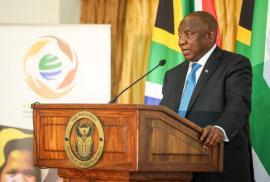
“In this ever-uncertain environment, South Africa stands proud. We have not wavered on our commitments and have in fact scaled up our climate action,” President Cyril Ramaphosa said on Friday in Pretoria.
Over the past five years, the establishment of the Presidential Climate Commission (PCC) played a pivotal role in shaping government policy to advance a low-carbon, climate-resilient economy and society.
This comes at a time when global momentum on climate action is waning, raising concerns about the world’s ability to meet the Paris Agreement targets.
“The state of climate financing for vulnerable countries remains perilous, hampering the ability of these countries to scale up their levels of ambition for both mitigation and adaptation. We know that these are challenging times for global climate action.
“Nine years since the signing of the Paris Agreement and with just five years to go before the world aims to meet the Sustainable Development Goals - countries of the world are way off track on climate goals,” the President said.
According to the World Meteorological Organisation, last year was the warmest year on record.
“We are on a trajectory to exceed the 1.5 degree Celsius warning limit. Despite this dire warning being sounded by experts for years, there has been noticeable climate action backsliding in a number of countries, including in the Global North,” he said.
The President made these remarks during the 20th Ordinary Commission Session where the PCC handed over its Five-Year Legacy and Review Report to the President as its term has come to an end.
WATCH |
In July 2021, the PCC delivered the first set of recommendations on South Africa’s Nationally Determined Contribution (NDC), advocating for more ambitious emissions targets with lower transition risk.
Just Transition Framework
“A year later, based on recommendations from the Commission, we released our Just Transition Framework, that sets out the actions that government and social partners will take to achieve to facilitate the transition to a low-carbon, climate resilient economy and society.
“It contains outcomes to be achieved over the short-medium, and long-run. On the advice of this Commission, we have been clear that the Just Transition must find expression in the Medium Term Development Plan, Annual Performance Plans as well as in the budget processes of every department,” the President said.
Furthermore, sectoral policies, including around energy, agriculture and industrial policy, should be aligned with a robust climate regulatory system.
“The Framework lays out the skills development, economic diversification, social support, governance and finance mechanisms required to make low carbon economy a reality. It also highlights the need to provide comprehensive social security safety for displaced workers and communities.
“In 2023, the Commission supported the release of the Just Energy Transition Implementation Plan 2023-2027. This Plan, developed under the guidance of the Commission and international partners, is what we have been able to take to the international climate finance community and international forums as tangible proof of our resolve to walk the talk on climate action,” President Ramaphosa explained.
It covers the necessary reforms, investments and concrete projects for the energy transition, with a strong focus on social justice.
“At COP30 in Brazil last month, having a credible, tangible plan in place to support meeting our climate targets bolstered South Africa’s credibility, and lent weight to our commitment to equity, ambition and international cooperation.
READ | SA welcomes outcomes of COP30
“The passage of the Climate Change Act last year was a crowning achievement for our country. One that was brought into being with the support of a wide range of stakeholders across society, including the Commission.
“This is not all. As we have worked to overcome a debilitating energy crisis, this Commission has lent its counsel to the restructuring of the energy sector, notably Eskom – and to aiding government in resolving contradictory policy pronouncements.”
Reflections
The President hailed the Commission for its counsel on the restructuring of the energy sector, notably Eskom – and to aiding government in resolving contradictory policy pronouncements.
Furthermore, the Commission initiated a three-sector study into water, built environment and agriculture, and into the development of an adaptation and resilience investment plan.
It has held consultations around the updated Integrated Resource Plan; supporting the development of municipal Just Energy Transition (JET) readiness assessments; and working on a Climate Finance Landscape report.
“The Commission’s evidence-based recommendations, inclusive processes, internationally respected thought leadership and engagements with international partners have raised South Africa’s profile in multilateral forums. This is particularly so with respect to the climate finance negotiations.
“It would be no understatement to say that the past five years have seen our reputation grow as a respected, principled, and above all pragmatic contributor to the global climate effort,” the President said
By convening business, labour, civil society, academia and government around the Just Transition, the Commission has helped shape conversations around equity, transition financing and the various dimensions of climate action not just domestically but globally.
“The prominence accorded to a just transition at the recent Group Twenty (G20) Summit bears testimony to this.
“The G20 Leaders’ Summit pledged to amongst other things increase the quality and quantity of climate finance to developing economies, and support country platforms like the Just Energy Transition Partnerships. We also saw substantial sums pledged to expand renewable energy across Africa,” the President said. -SAnews.gov.za


