


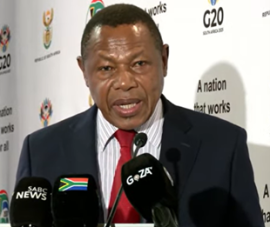
In a report released today, Health Ombud Professor Taole Mokoena, revealed findings from two investigations that uncover systemic failures and tragic lapses in the country’s healthcare system.
The reports focused on the deaths of two patients – Pitsi Eliphuz Ramphele at the government-run Pietersburg Provincial Tertiary Hospital (PPTH) in Limpopo, and Dr Edward Mabubula at the private Wits Donald Gordon Medical Centre (WDGMC) in Gauteng.
The investigations highlighted procedural breaches, inadequate documentation, and critical staff shortages as key issues contributing to these incidents.
According to the Ombud, Ramphele’s investigation was based on a complaint received from a relative in March this year after alleged medical negligence that resulted in his death at PPTH.
The investigation determined that on 26 November 2024, Ramphele sought medical care at Rethabile Community Health Centre (RCHC).
He was attended to by the nursing staff, who referred him to a doctor, but the doctor left before he could be seen.
On the same day, he was taken to PPTH, where he was admitted with acute small bowel obstruction (ASBO).
“Mr Ramphele waited nearly four hours before the medical file was opened for him,” the report stated, citing severe staff shortages and inadequate equipment.
The inquiry found that doctors had left the facility before all patients had been attended, with security guards instructing patients, including Ramphele, to go home.
The report found that both the triage and post-operative care were lacking and that nurses were falsifying medical records.
According to the report, the observation room lacked essential medical equipment, and untrained enrolled nursing auxiliaries were assigned to triage duties.
“The first allegation is that there was a delay in opening a patient file, which resulted in a delay of care.”
In addition, the probe established that the nurses were not familiar with the concept of triage, which is critical in categorising patients’ acuity and prioritisation.
Despite clear signs of a complicated bowel obstruction, surgical intervention was delayed, contributing to Ramphele’s death.
The patient passed away on 28 November 2024, while awaiting assessment for possible surgical intervention, which the Health Ombud believes could have been “avoidable”.
When a post-mortem was requested, the hospital said it did not offer such a service, forcing the family to seek private assistance.
In the WDGMC case, the investigation examined the death of Mabubula, a cancer patient and doctor, who died due to a series of care failures.
Mabubula’s wife alleges that WDGMC is responsible for causing the cerebral air embolism and subsequent stroke suffered by her husband, following a medical procedure performed at the oncology ward on 27 March 2021.
“The Donald Gordon Medical Centre had a long-standing informal courtesy practice of removing venous ports after chemotherapy that were carried out outside regular hours, where no patient files were created or retrieved to document clinical status,” the report said.
The report found that the private hospital in Johannesburg had “no baseline clinical assessment or essential clinical information was recorded before the procedure was undertaken”.
However, on concerns regarding alleged medical negligence by WDGMC, the Ombud said the allegation could not be substantiated.
However, it was determined that improvements are needed in adherence to established protocols and standards for medical record-keeping and documentation.
The Health Ombud recommends that the WDGMC management engage in mediation with Mabubula’s wife to address her concerns constructively and expediently.
The Ombud also found that there is no evidence indicating that the nurses’ conduct at WDGMC was of a nature that would require referral to their professional regulatory body.
The Health Ombud’s recommendations went beyond the two cases, calling for sweeping reforms.
These include the establishment of protocols, mandatory clinical assessment, dedicated records and staffing and infrastructure upgrades.
Mokoena also called for clinical audits and mortality reviews to prevent future tragedies at PPTH.
He also urged the referral of implicated doctors and nurses at the PPTH to their respective regulatory councils for professional misconduct and stressed the importance of restoring leadership stability and filling management posts.
Health Minister, Dr Aaron Motsoaledi, emphasised the unacceptable treatment of patients, including aggressive intestinal obstruction misdiagnosis and conservative management without proper observation.
He criticised the falsification of patient records and the abandonment of patients by doctors.
The Minister called for severe consequences, including referrals to professional councils, to ensure accountability and improve healthcare standards, highlighting that similar facilities in other countries manage with fewer resources.
“We cannot describe this as merely corrective. This needs very serious punitive measures for other people to see that they shouldn’t do something like this to any other patient or human being,” Motsoaledi said. – SAnews.gov.za


