


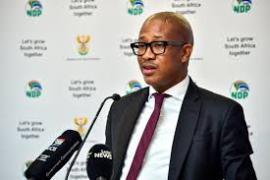
Deputy Minister in the Presidency Kenny Morolong says the South African creative industry is a significant one that generates considerable revenue and provides employment to many.
“The industry plays a vital role in the economy by contributing towards knowledge attainment, nation-building and cultural preservation,” Morolong said on Tuesday.
Speaking at the book launch of Business by Grace, written by Zibusiso Mkhwanazi, Morolong said by publishing local literature and promoting cultural heritage, the sector contributes to the preservation and development of the South African culture of reading and writing.
The book by Mkhwanazi – a South African advertising guru and entrepreneur who rose from humble beginnings - is described as "not just a story of business success". The Mkhwanazi Foundation says Business by Grace shows readers how to embrace lessons that come from building businesses in the face of hardship, and provides practical insights on turning vision into value.
Morolong said the creative industry, including publishing and print media, is an important source of revenue and employment in South Africa.
"The industry also acts as the central core of an entire network of related individuals and industries, such as paper manufacturers, educational institutions, ink producers, authors, printers, designers, book binders, illustrators, booksellers, distributors and CD manufacturers.
“The importance of the creative industry in this new environment is greatly increased... as it is a source of information and knowledge, and a vehicle for political, social and cultural expression.”
Morolong identified the sector as one that can and ought to help South Africans to overcome the many persistent challenges that confront society and the economy.
“Our expectations of this sector are onerous. However, the history we are making is centred on growing the sector in the same way we have grown other sectors of our economy through inclusion, empowerment and unleashing the energies and talents of South Africans."
Morolong said a great deal has also been written to capture the defining features of post-apartheid South Africa, and the necessarily high cost of democratic transformation.
“Demographic conditions such as high unemployment rates, the youthfulness of the population, uneven access to basic services, such as water and electricity, form part of the challenges that continue to confront the current government.
“The process of change is by necessity also related to new policies that aim to facilitate comprehensive economic reforms, encapsulated in the many government policy frameworks and more recently in the National Development Plan Vision 2030.
“These reforms have in general, been focused in two directions. In the first place, reforms are aimed at addressing the immense disparities in wealth and status in South African society and provide improved access to opportunities for employment and benefits to those negatively affected by apartheid policies,” the Deputy Minister said. – SAnews.gov.za


