


Government has announced that it will scale down operations at the Musina Temporary Repatriation Processing Centre (TRPC) from 20 000 to 1 500 capacity from 1 August, as the implementation of its Five-Point Plan on Migration Management continues to yield results.
The decision follows a sustained decline in the number of undocumented foreign nationals requiring processing at the facility, which was established in June to manage increased migration pressures and facilitate orderly repatriations.
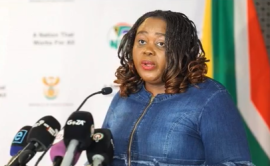
Delivering a progress report on the implementation of the Five-Point Plan on Sunday, Justice and Constitutional Development Minister Mmamoloko Kubayi said government remains committed to strengthening migration management, while ensuring that humanitarian support and constitutional obligations remain central to its approach.
“The IMC has taken a decision at its regular meeting on Friday, 24 July 2026, that as of the 1st of August 2026, operations at the TRPC will be scaled down from 20 000 capacity to 1 500 capacity, after analysis of data trends for the past three weeks,” Kubayi said.
The Minister said the phased reduction in operations will not compromise government's ability to process undocumented foreign nationals or carry out deportations and repatriations.
“We envisage that the phased scaling down of the centre will not negatively impact or compromise both the deportation and repatriation processes we are undertaking.
“The State remains with the legal obligation to continuously manage the issue of migration in the country and will continue to do so guided by the Five-Point Plan and immigration laws of our country, and the work being monitored by Cabinet,” she said.
Thousands processed
Kubayi said government has made significant progress in processing undocumented foreign nationals since migration pressures intensified in June.
“Regarding deportations and repatriations, we can confirm that since Malawian nationals assembled at Sherwood in KwaZulu-Natal between the 14th of June 2026 to 24 July 2026, a total of 68 138 foreign nationals have been processed, with the majority repatriated following processing at the Musina Temporary Repatriation Processing Centre,” she said.
The Border Management Authority (BMA) has also processed 72 906 repatriations through all ports of entry between 7 June and 14 July for various nationalities, including those processed through the TRPC.
“The majority of nationals processed at the TRPC centre were Malawian nationals, followed by Zimbabwean and Mozambican nationals,” the Minister said.
Kubayi said South Africa's dedicated immigration courts have also been processing migration-related matters at an accelerated pace.
She said between 1 April and the end of June, immigration courts finalised 28 736 immigration-related cases, mainly dealing with deportations.
Of these, Gauteng accounted for 13 312 cases, representing 46% of the total, while KwaZulu-Natal finalised 4 973 cases, most of them through the dedicated courts in Durban Central and Sherwood. The Western Cape completed 3 334 cases and the Eastern Cape finalised 2 019 cases.
Government is now working to establish a dedicated immigration court at OR Tambo International Airport on a site identified by Airports Company South Africa (ACSA), while upgrades to the Lindela Court at the deportation facility are also expected to commence.
Humanitarian response
Kubayi said while government has intensified migration enforcement, it has remained committed to protecting vulnerable people requiring humanitarian assistance.
She noted concerns raised by some sectors regarding conditions at the Musina Temporary Repatriation Processing Centre and stressed that government had worked closely with social partners to provide assistance.
These interventions include healthcare services and medical screening, access to food, water, sanitation and other basic relief support, child protection measures, support services for women and vulnerable groups, as well as coordination with embassies, consulates, faith-based organisations, non-governmental organisations and international partners.
Government also identified and referred individuals requiring emergency social support and protection services.
“We have undertaken all these interventions because we recognise the plight of those affected by this situation.
“But we also want to emphasise that South Africa has, in many instances, provided humanitarian and logistical support beyond what is ordinarily required under international repatriation arrangements, particularly where vulnerable individuals are involved or where receiving-country logistical arrangements are still being finalised,” kubayi said.
Benefits of the temporary centre
Kubayi said the establishment of the TRPC has enabled government to manage migration pressures in a coordinated and humane manner.
The facility facilitated orderly and dignified departures through a centralised processing system that provided transportation, documentation and humanitarian assistance to those being repatriated.
It also reduced immediate safety risks by creating a centralised processing site and improved coordination among government departments, municipalities, embassies and humanitarian organisations.
The centre enabled humanitarian relief to be monitored by organisations including United Nations agencies -- the United Nations Children's Fund (UNICEF), the United Nations High Commissioner for Refugees (UNHCR), the International Organization for Migration (IOM), the South African Council for Churches, Parliament's Portfolio Committee on Home Affairs and the Limpopo Provincial Legislature Committee on Transport and Safety.
Kubayi said the facility also reinforced South Africa's constitutional and international obligations by ensuring protection and assistance for vulnerable groups, including asylum seekers and refugees.
Government thanks partners
The Minister expressed appreciation to the many institutions that supported the operation of the centre, saying it became operational within four days after the IMC resolved to establish it on 26 June.
She thanked officials from the Department of Public Works and Infrastructure, Department of Home Affairs, Border Management Authority, South African National Defence Force, Department of Social Development, South African Police Service, Department of Health, Musina Municipality and Limpopo Provincial Government for operating the facility seven days a week.
Kubayi also acknowledged the cooperation of embassies that assisted in repatriating their nationals.
She thanked the business community, particularly MTN, for donating R15 million to support Gift of the Givers in providing essential services at the centre, while MTN and Vodacom also provided network connectivity.
Government further expressed appreciation to humanitarian organisations and community groups, including Gift of the Givers, the Al-Imdaad Foundation, Africa Muslim Agency, Musina Reformed Church and Mahlasedi Foundation, which provided food parcels, water, infant formula, nappies, sanitary products and other essential supplies to vulnerable people.
Migration management continues
Although operations at Musina will be significantly reduced, Kubayi said government has already identified assembly points across municipalities - through the Department of Cooperative Governance and Traditional Affairs - to ensure it can respond quickly, should migration pressures increase again.
She urged all stakeholders to continue supporting designated assembly points, in partnership with municipalities.
Kubayi reiterated that migration management is a long-term national programme involving all spheres of government, law enforcement agencies, border authorities, municipalities and social partners.
“The implementation of the Five-Point Plan is yielding tangible progress. We are strengthening law enforcement. We are securing our borders. We are working closely with partner countries. We are improving policy and legislation, and we are ensuring that humanitarian considerations remain central to our response.
“While challenges remain, government is firmly committed to implementing a migration system that is secure, humane, lawful and aligned with the values of our Constitution,” the Minister said. – SAnews.gov.za


