


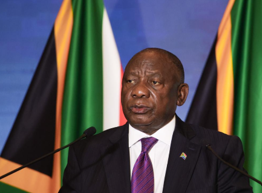
President Cyril Ramaphosa will on Monday, 23 March 2026, officiate the reburial ceremony of Khoi-San ancestral human remains at the Kinderlê Monument in Steinkopf, Northern Cape.
The remains of 63 individuals will be reburied following their repatriation over successive periods from museums in Europe.
In a statement on Saturday, the Presidency said the ancestral remains are a small group of thousands of illegally removed remains of indigenous people during the late 19th century and the early 20th century.
After they were illegally removed from their graves, the remains would be traded or donated to newly established museums and universities.
“For the Khoi-San people, these violations did not begin in the modern apartheid era but date back centuries with colonial conquest, land dispossession, cultural erasure, removal, race-based scientific research, and the exploitation of ancestral remains,” the Presidency said.
The repatriation and reburial process of these human remains has been jointly facilitated by the Department of Sport, Arts and Culture (DSAC) and its entities -- the South African Heritage Resources Agency and Iziko Museums.
The necessary cultural guidance and oversight have been provided by the Northern Cape Task Team, a representative body of various Khoi and San cultural groupings.
“This repatriation programme forms part of a broader national commitment to honour those who sacrificed their lives in the fight for freedom, ensuring that they are returned to their homeland with the dignity and respect they deserve.
“The reburial is deeply significant and resonates with the commemorative spirit of Human Rights Month. Human Rights Day commemorates the struggle against dispossession, violence and the denial of dignity,” the Presidency said.
Khoi-San leaders recognised as key governance partners
Responding to oral questions in the National Assembly on Thursday, 12 March 2026, President Ramaphosa said traditional and Khoi-San leaders are recognised as key governance partners under the District Development Model.
He said the legal framework supporting their participation includes the Traditional and Khoi-San Leadership Act, which enables traditional councils to support municipalities in identifying community needs.
In addition, the Municipal Systems Act requires municipalities to consult traditional leaders when developing Integrated Development Plans, while the Municipal Structures Act allows recognised senior traditional and Khoi-San leaders to participate in municipal councils as ex officio advisory members.
These provisions allow traditional leaders to attend council meetings, address councils on issues affecting their communities and contribute to discussions on policy, by-laws and service delivery.
“While the framework is robust, implementation across municipalities remains uneven. To address this, the Medium-Term Development Plan now includes a specific indicator for the participation of Traditional and Khoi-San leadership in planning, implementing and monitoring government programmes,” the President said.
He said the Department of Cooperative Governance and Traditional Affairs has begun capacity-building workshops in district and metropolitan municipalities to improve compliance with the legislation.
The review of the White Paper on Local Government currently underway is also expected to propose stronger cooperation between municipalities and traditional leadership institutions.
“The Government remains firmly committed to ensuring that the institution of Traditional and Khoi San Leadership is fully recognised, empowered and integrated into our governance system. Their wisdom, legitimacy and proximity to communities are indispensable to building a capable state and improving service delivery for our people,” President Ramaphosa said. – SAnews.gov.za


