


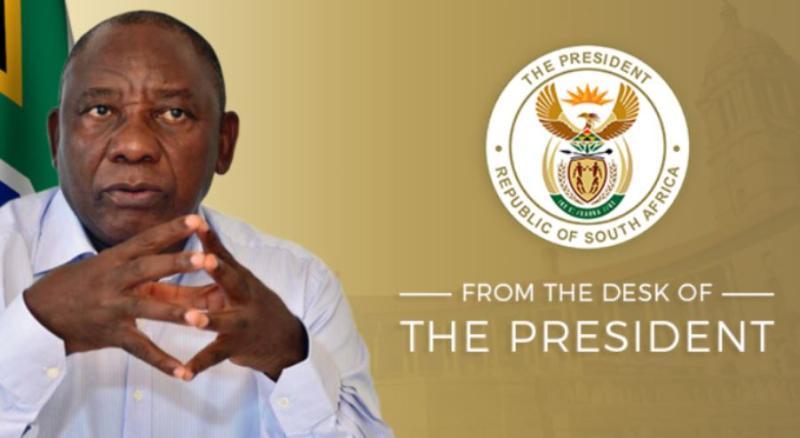
President Cyril Ramaphosa says the improvement in South Africa’s public finances must translate into tangible benefits for citizens, including better public services, infrastructure development, job creation and poverty reduction.
In his weekly newsletter to the nation on Monday, the President said the progress made in stabilising public debt and improving the country’s fiscal position must be matched by visible improvements in the lives of South Africans.
“Our job now is to turn financial stability into economic opportunity and a better quality of life for everyone,” he said.
His remarks follow the presentation of the Medium-Term Budget Policy Statement (MTBPS) by Finance Minister Enoch Godongwana in Parliament last week, which outlined progress in restoring the health of the country’s public finances.
President Ramaphosa said decisions on how government raises, spends and manages public funds directly affect the quality of education, healthcare, infrastructure and the economy’s ability to create jobs.
“For many of us, the state of the country’s public finances might feel like something far removed from the struggles of daily life.
“For the first time in nearly two decades, public debt has stabilised, and it is now beginning to decline. Since 2023, we have maintained a primary budget surplus, meaning that, excluding debt service costs, we have been spending less than we have been earning,” he said.
The President explained that rising public debt had increased the cost of servicing it, diverting resources that could otherwise have been used to build schools and houses, equip hospitals, maintain roads and deliver essential services.
He said government had been working to stabilise public finances while addressing poverty and unemployment, following the effects of state capture and the COVID-19 pandemic on the economy.
According to the President, the improved fiscal position allows government to reduce debt, lower borrowing costs and strengthen confidence in the economy.
He also acknowledged the pressure on households from the rising cost of living, noting that the temporary reduction in the fuel levy announced by the Minister of Finance was among the measures aimed at providing relief.
Economic recovery
President Ramaphosa noted that stabilised debt and maintaining a primary budget surplus are part of a “bigger economic recovery”.
“The end of load shedding, our improved fiscal position and our removal from the Financial Action Task Force [FATF] grey list have contributed to the rise in public confidence and our first sovereign credit rating upgrade in over 16 years,” he noted.
Furthermore, the South African Revenue Service recovery following the state capture era has also “enabled better collection rates”.
The revenue service recorded a historic R2.01 trillion net revenue collection in the 2025/26 financial year.
“This is revenue being used to deliver tangible benefits to the South African people as more resources are made available for social and development spending.
“It is being used to build more schools and clinics, improve public services, deliver social grants and invest in public infrastructure that communities rely on,” he stated.
Smarter spending and targeted savings
President Ramaphosa said restoring the country’s finances was not only about increasing revenue or reducing debt, but also about ensuring public funds are spent efficiently and accounted for properly.
Government is reviewing its spending priorities, eliminating waste and inefficiencies, and phasing out programmes that perform poorly or lack clear outcomes.
“This process is already producing measurable savings.
“More than R11 billion in savings has been identified in the medium term from rationalising low-priority programmes,” he said.
These savings mean more spending on the social wage, which includes health, education, social development and services for low-income households, accounts for around 60% of non-interest spending.
This funding supports free basic services for more than 11 million households, school meals and social grants for more than 18 million beneficiaries.
President Ramaphosa highlighted that the approach is to make targeted savings rather than impose indiscriminate cuts to departmental budgets, allowing more resources to be directed towards social and development spending.
Government is also reviewing the Infrastructure Conditional Grant to establish why provinces and municipalities underspend, why projects are delayed or exceed budgets and why the quality of completed projects is often poor.
“Our aim is not to spend less but to spend smarter,” he said.
Infrastructure investment and job creation
The President said the improved fiscal position is creating opportunities for increased infrastructure investment, which is essential for inclusive economic growth and job creation.
“Payments for capital assets are the fastest-growing item in our budget, and new measures have been put in place to increase private sector investment in infrastructure,” President Ramaphosa said.
Government is also allocating additional funding to combat gender-based violence and femicide.
The funding includes resources to employ more than 3 500 social workers and strengthen forensic and investigative services to improve the handling of gender-based violence cases and help secure successful prosecutions and convictions.
More work needed to improve living conditions
While acknowledging progress in stabilising public finances, President Ramaphosa said government remains aware that many South Africans had yet to experience the benefits of the economic recovery.
“Unemployment is still far too high, too many families are struggling to get by and too many communities are dealing with poor services.
“We shouldn’t mistake financial stability for the end of the road. There is still a lot of work to do. But we should recognise how far we have come,” he said.
He said the MTBPS signals greater confidence and stability, while demonstrating government’s commitment to economic recovery, investment, growth and job creation over the medium term.
The President emphasised that responsible financial management is important not only for attracting investment and responding to economic shocks, but also for protecting vulnerable citizens and building a stronger future.
He said the progress made placed a greater responsibility on government to ensure that improvements in the country’s finances resulted in meaningful changes that people could see and experience in their daily lives.
“At the end of the day, that is what responsible management of public money is all about: not just a healthier balance sheet for the government, but a better life for the people of South Africa,” President Ramaphosa said. – SAnews.gov.za


