


Government is undertaking preparatory work to repatriate the remains of South Africans who died in Angola between 1976 and 1992 in cases linked to apartheid-era political conflict, as part of efforts to return them to their families.
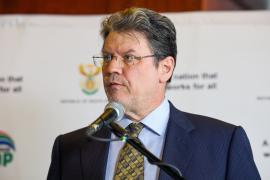
This is according to Deputy Minister of Justice and Constitutional Development Andries Nel, who provided an update on the Angola phase of the SA Exile Repatriation Project in Pretoria on Friday.
The Exile Repatriation Project gives effect to the recommendations of the Truth and Reconciliation Commission (TRC), which called on government to continue tracing people who disappeared in political circumstances between 1960 and 1994.
This includes people who died within South Africa, as well as those who died or disappeared while living in exile.
“Available information indicates that between 300 and 400 combatants of Umkhonto we Sizwe (MK) died in Angola during this period. Current assessments indicate that between 30 and 50 per cent of the deceased may be recoverable.
“Symbolic and spiritual repatriation will therefore remain an important component of the Angola project for families whose relatives cannot be physically located or identified,” Nel said.
The Missing Persons Task Team has recovered the remains of more than 230 people in cases linked to apartheid-era political conflict.
The Exile Repatriation Programme has also resulted in the recovery of the remains of 49 people from Zambia and Zimbabwe.
A preliminary mission to Angola was undertaken in 2025 to conduct grave mapping, during which the Technical Team identified 89 potential graves for excavation.
This is an initial figure and does not include all possible burials at former African National Congress (ANC) camps.
“Further investigations are expected to identify additional sites. Recovery will proceed in phases. The initial work will concentrate on sites that can be investigated without the extensive preparation required in more complex areas.
“Former camps in parts of the Eastern and Northern Fronts are expected to be addressed in 2027 because bush clearance and demining must first be completed.
“Preparatory work is also being conducted in South Africa. The TRC Unit and the Missing Persons Task Team are tracing affected families and collecting DNA (deoxyribonucleic acid) samples from appropriate relatives,” the Deputy Minister said.
Nel said DNA reference samples will be essential, as identification in many Angola cases will depend heavily on comparison with biological relatives.
The TRC Unit is engaging families, explaining the process, assisting with travel documentation, and coordinating with provinces, municipalities and other institutions.
“Family representatives will travel in groups to Angola to undertake pre-exhumation visits and rituals. The Viana Transit Camp has been identified as an important location for these visits because MK members passed through it during their time in Angola.
“Families will be able to conduct relevant spiritual, cultural or religious rituals there. At the pre-exhumation stage, families will not be taken to particular graves because the identities of those buried at individual sites will not yet have been scientifically confirmed,” Nel said.
The Technical Team is scheduled to undertake excavations and exhumations in September or October 2026, subject to approvals by the Angolan authorities.
The planned sites include three cemeteries in Luanda; Malanje town, Quela village and a field site in Cacuso in the Eastern Front; as well as Caxito Camp and eight graves at the entrance to Pango in the Northern Front.
“Where there are clear indications that remains are South African, they may be exhumed and transferred to a storage area made available by the Angolan authorities for further forensic examination.
“DNA analysis will be used to confirm identity unless reliable identification can be established through other evidence. Where there is insufficient certainty about the nationality of remains, DNA samples may be taken without removing the remains at that stage,” the Deputy Minister explained.
Nel emphasised that repatriation will take place only after South African status and, where possible, individual identity have been confirmed.
The remains will then be returned to South Africa for formal handover and reburial, in consultation with the affected families, provinces and municipalities. -SAnews.gov.za


