


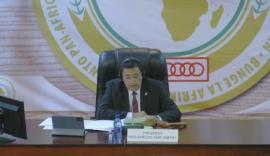
The Pan-African Parliament (PAP) has committed to institutional reforms aimed at making the continental legislature more effective, transparent and influential in advancing African integration, peace and sustainable development.
Opening the First Ordinary Session of the Seventh Parliament in Midrand on Monday, President of the Pan-African Parliament, Dr Fateh Boutbig, said the new parliamentary term marked a turning point for the institution as it seeks to deliver tangible results for the people of Africa.
“It marks a pivotal moment in the journey of our continental institution and the beginning of a new chapter in which we are keenly aware of the magnitude of our responsibility, the nobility of our mission, and the breadth of the hopes that the peoples of Africa place in their Parliament,” Boutbig said.
He said the Seventh Parliament would be guided by the principles of "Reform, Effectiveness, Partnership, and Delivery", shifting the institution from making recommendations to ensuring their implementation and impact.
“The peoples of our continent expect from us not eloquence, but sincerity of commitment. They judge the success of their institutions not by the promises they proclaim, but by the tangible achievements that improve citizens' lives,” he said.
Boutbig said the Parliament would focus on building a modern institution founded on competence, innovation, transparency, accountability and effective parliamentary diplomacy.
He thanked South Africa for continuing to host the seat of the Pan-African Parliament and acknowledged the country's contribution to advancing continental unity.
“I am pleased to extend my sincere thanks and profound gratitude to the Republic of South Africa – its President, Government, Parliament and people – for hosting the Seat of the Pan-African Parliament and for the generous and sustained support it has provided, and continues to provide, to our institution and to the institutions of the African Union,” he said.
The President reaffirmed the Parliament's commitment to supporting the African Union's Agenda 2063, describing it as the framework that embodies Africa's aspirations for prosperity, integration and security.
He identified four strategic priorities that will shape the work of the Seventh Parliament.
These include: strengthening the institutional performance of the Pan-African Parliament through governance reforms and revised rules of procedure; advancing legislative and economic integration to support implementation of the African Continental Free Trade Area (AfCFTA); using parliamentary diplomacy to promote peace, justice and conflict resolution; and driving digital transformation and digital sovereignty across the continent.
On economic integration, Boutbig described the AfCFTA as a transformative project for Africa.
“The African Continental Free Trade Area is not merely an economic agreement or a legal framework governing trade among our countries. It is a civilisational and strategic project that embodies Africa's determination to build its future through its own capabilities,” he said.
He said the Parliament would continue supporting legislative harmonisation and stronger cooperation among African states to unlock the full benefits of continental trade.
Addressing peace and security, Boutbig renewed the Parliament's call for African-led solutions to conflicts across the continent while reaffirming support for international law and the rights of peoples.
“The Pan-African Parliament will remain a forum for dialogue, a platform for bridging differences, and a partner in supporting the African Union's efforts to prevent conflict and resolve disputes by peaceful means,” Boutbig said.
Boutbig also highlighted the African Union's 2026 Theme of the Year on safeguarding sustainable water and sanitation services, saying it underscored the need for legislative action to ensure responsible management of one of the continent's most critical resources. – SAnews.gov.za


