


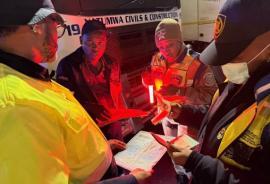
A high-impact government inspection blitz at the Mooi River Toll Plaza in KwaZulu-Natal has placed the road freight and logistics sector under scrutiny, exposing immigration breaches, unsafe transport practices and suspected human trafficking.
The operation, led by Deputy Minister of Employment and Labour Jomo Sibiya, Deputy Minister of Home Affairs Njabulo Nzuza and Deputy Minister of Transport Mkhuleko Hlengwa, formed part of the inspection and enforcement services multidisciplinary blitz programme.
It brought together labour inspectors, immigration officials, transport authorities and law-enforcement agencies to test compliance.
Sibiya, in a post on social media platform X, said the operation had yielded significant results.
“The operation closed both N3 North and South bound, a number of illegal immigrants driving without work permits were arrested and in a turn of events some drivers opted to use the R103 and our agile team identified them and our operation moved to R103 where we arrested two drivers trafficking some Malawian citizens who have since been taken to a place of safety for processing for deportation,” he wrote.
The inspection comes amid tensions in the trucking industry, where local drivers and communities have raised concerns about undocumented foreign nationals being employed as drivers.
Mooi River has previously been associated with protests linked to the sector.
In an interview with the SABC, Nzuza said the operation – whose main target was undocumented foreign nationals working in the trucking industry – made a substantial number of arrests, although figures were not yet finalised.
He said the operation helped government understand the problem “on the ground”, especially in areas where complaints had been made about undocumented foreign nationals driving trucks.
He said some people entered South Africa as visitors and later took up work in domestic and cross-border trucking.
“They are employed by truck owners who are also not following the law, because they are employing people who are illegally in the country,” the Deputy Minister said.
“We want to send a very clear message to employers that we are now targeting employers. We want to cut the demand for illegal immigrant labour.”
The focus was not limited to drivers but extended to operators and employers accused of creating demand for unlawful work.
Speaking to Newzroom Afrika, Hlengwa said the joint presence of several departments was important because the risks crossed institutional boundaries.
“The presence of the various government departments and entities collaborating is important across the ecosystem because it is about the pooling and sharing of resources,” he said.
He said the operation pointed to the need for public education, particularly where vulnerable people may not understand where they are being taken. He said alleged human trafficking involving women and children – which was identified during the blitz - created risks for the state and demanded coordinated intervention.
From a transport perspective, Hlengwa said some vehicles were allegedly being used outside the conditions of their permits, including as passenger vehicles.
“You cannot fit 10 or 12 people in the back of a truck like that, including children, and then also add cargo onto the vehicle. It is an overload, it is a risk to the vehicle, and it is a risk to other road users as well,” he said.
The blitz highlights government’s attempt to combine labour enforcement, immigration control and road safety oversight. Its success will depend on sustained inspections, employer accountability and protection for vulnerable people. – SAnews.gov.za


