


Executive Secretary of the Southern African Development Community (SADC) Elias Magosi has emphasised that the Southern African region must move beyond exporting raw minerals and accelerate value addition to unlock industrial growth and economic transformation.
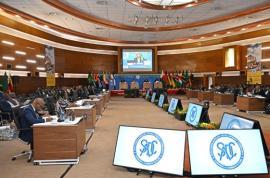
Magosi was speaking during the official opening of the SADC Council of Ministers meeting in Pretoria on Thursday.
He said the region is richly endowed with critical minerals essential for the global energy transition but continues to export most of these resources in raw form.
“In mining, our challenge has never been scarcity, but value addition. While our region is significantly endowed with minerals, inclusive of those considered to be of relevance to energy transition such as cobalt, copper and manganese, amongst others, regrettably, they still leave our borders in raw form,” Magosi said.
He noted that the region has adopted the SADC Regional Mining Vision to reposition the mining sector as a catalyst for industrialisation by strengthening linkages between mining and downstream industries such as mineral beneficiation, equipment manufacturing and related services.
According to Magosi, about 20 potential regional mining projects worth an estimated $2.3 billion have already been identified as viable investments.
“These projects focus on the manufacturing of batteries, mining inputs and mining equipment, among others,” he said.
Progress in regional trade and industrialisation
Magosi said the region is making gradual progress in trade integration, with intra-regional trade in manufactured goods increasing from 19% to 22%.
The expansion of the SADC Free Trade Area has also strengthened regional market integration following the entry of Angola and the Democratic Republic of the Congo.
He said initiatives such as the introduction of the Electronic Certificate of Origin and the establishment of One-Stop Border Posts are helping to reduce trade barriers and improve efficiency.
“These traders are not a mere statistic; they are mothers, fathers and young entrepreneurs whose livelihoods depend on seamless and painless trade. When they succeed, this builds into our collective success,” Magosi said.
Energy access remains a major challenge
Despite progress in some areas, Magosi said energy access remains uneven across the region.
While countries such as Mauritius and Seychelles have nearly achieved universal electricity access, much of the region still lags behind.
“In many parts of our region, electricity access remains below 60%, and in some member states it is below 30%,” he said.
Magosi added that improving energy infrastructure and expanding cross-border power trade through the Southern African Power Pool will be essential to boosting industrial development and economic growth.
Projects such as the Malawi–Mozambique and Tanzania–Zambia power interconnectors are expected to strengthen regional electricity networks and support power trading among member states.
Stronger regional financing
Magosi also urged member states to accelerate the signing and ratification of the SADC Regional Development Fund agreement, which aims to finance key regional programmes.
So far nine member states have signed the agreement, but additional ratifications are required before the fund becomes operational.
“The world is shifting, and the current geopolitical environment is a reminder that we must become more united and innovative. The Regional Development Fund is our vehicle for transformation. Without it we stand still, and with it we can move forward together,” he said.
Humanitarian and food security pressures
Magosi said Southern Africa continues to face humanitarian challenges, including natural disasters and food insecurity.
Recent floods in several member states have affected more than 1.3 million people, displaced over 100 000 and claimed more than 285 lives.
At the same time, acute food insecurity is projected to affect around 58 million people across the region in the 2025/26 period.
He warned that livestock diseases such as Foot and Mouth Disease also pose a serious threat to food security and trade.
Peace and stability
Magosi emphasised that peace and security remain top priority for regional development. SADC continues to support diplomatic efforts to resolve instability in the Democratic Republic of the Congo and political tensions in Madagascar. – SAnews.gov.za


