


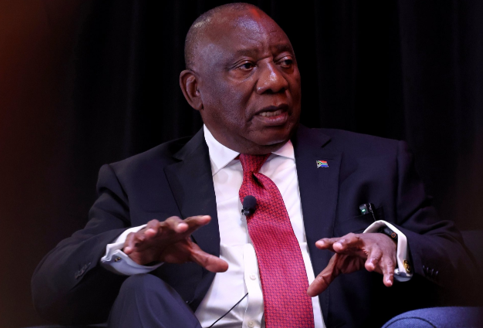
Silicon Valley, California - South Africa is looking to establish a R100 million venture capital fund and a credit guarantee fund to support start-ups in artificial intelligence (AI) and the broader technology sector.
Addressing media at the conclusion of his working visit to Silicon Valley in the United States, President Cyril Ramaphosa outlined the proposed funding initiative as a key outcome of engagements with entrepreneurs, venture capital firms and leading technology companies.
He said government would seek to match commitments from entrepreneurs and invite the private sector to participate in building a funding ecosystem that enables South African technology businesses to grow and compete globally.
The President described the five-day working visit as a highly successful journey of discovery, which had strengthened South Africa’s understanding of AI, opened doors for new partnerships and positioned the country to attract investment in the rapidly evolving technology sector.
“We walk away from Silicon Valley with commitments that have been made by some of our own entrepreneurs. We've come up with the idea that we should set up a venture capital fund that will start off with R100 million, as well as a credit guarantee fund that will help start-ups in our country in the AI and tech industry,” he said.
He said the initiative marks the beginning of a broader effort to develop South Africa’s venture capital ecosystem and make it easier to attract foreign investment.
“As a key outcome of this visit, this is the fund that we are going to set up, and we will be inviting the private sector back home to be part of this,” the President said.
The working visit brought together a delegation of almost 300 South Africans, including business leaders, Ministers, government officials, students, public entity representatives and research institutions.
The delegation engaged with some of the world's leading technology companies, investors, academics and AI experts, with the aim of understanding how South Africa can harness emerging technologies to advance economic growth, create jobs and improve service delivery.
The President said the visit was necessary as the world stood on the cusp of a major technological revolution that would fundamentally reshape economies and societies.
“We need to harness this new technology for the benefit of South Africans. Our intent is that South Africa should not be left behind,” the President said.
He highlighted the opportunities presented by AI, including improving government services, expanding access to information and creating new economic opportunities. However, he cautioned that the technology also carried risks, particularly concerning job losses and cybersecurity threats.
The President said South Africa wanted to exercise its own sovereignty over AI by building domestic expertise, developing local capabilities and ensuring that the technology was used responsibly.
He stressed the importance of preparing workers for the changing world of work through reskilling, upskilling and retooling, while ensuring that vulnerable groups were not left behind.
Among the key gains from the visit was the opportunity to learn directly from leading developers of frontier AI models, chip manufacturers, semiconductor companies and infrastructure providers. These engagements, he said, would help inform the development of a world-class national AI policy.
The visit also created opportunities to strengthen relationships between South Africa and Silicon Valley, including reconnecting with South Africans in the diaspora who have established successful businesses in the technology sector.
The President said government would establish a facility to enable these professionals to reconnect with South Africa, contribute their expertise and help mobilise investment into the country.
On investment opportunities, President Ramaphosa highlighted South Africa's growing data centre infrastructure, noting that the country hosts more than 70% of Africa's total data centres.
He said this presented an opportunity for the country to expand its computing infrastructure to meet the growing demand for processing capacity driven by AI.
“South Africa can be a major player in the computing infrastructure. We already have substantial investments in data centers in our country, with more than 70% of Africa's total data centers being located in South Africa,” he said.
He added that ongoing reforms were helping to position the country as an increasingly attractive investment destination, with potential to secure substantial fixed investment from technology companies and generate future earnings through exporting AI computing capacity to global markets.
The delegation also included South African students pursuing postgraduate studies and local start-up entrepreneurs, whose participation the President said was important in strengthening the country's own knowledge and innovation capabilities.
He said South Africa was determined not to remain merely a consumer of AI technology but to become an active developer.
“In fact, we articulated very clearly to the people that we met here at the Silicon Valley, and as South Africans, we refuse to be left behind, and we refuse to become consumers. We want to be part of the developers of artificial intelligence,” he said.
The President further emphasised that South Africa wanted the continent to benefit from the technological revolution, rather than repeat the experience of being left behind during the Industrial Revolution.
Looking ahead, President Ramaphosa said the delegation would return home with the responsibility of translating the engagements into practical outcomes.
A dedicated team would coordinate the development of an action plan, with the President expecting implementable ideas and proposals within 90 days.
“We do not want to move from the Silicon Valley, having had presentations, having had speeches, and all that, and just go back home with concepts and ideas. We want implementable ideas and processes,” the President said.
He said the successful visit had laid a foundation for further engagements with other parts of the world in the new year, with future delegations expected to include labour and civil society representatives.
“This has been a most impactful journey,” he said, describing the experience as one that had generated valuable lessons and practical ideas to be implemented back home. – SAnews.gov.za


