


By Moahlodi Maphori
South Africa’s pursuit of sustained and inclusive economic growth requires a deliberate focus on industrialisation, with Special Economic Zones (SEZs) playing a central role in attracting investment, expanding productive capacity and creating employment opportunities.
In the context of slow economic growth and high unemployment, investment pledges must produce measurable results by supporting local businesses, boosting exports and generating lasting employment.
Investor confidence is being strengthened by government's ongoing efforts to address structural constraints that have historically undermined economic performance and increased the cost of doing business.
The recent investment developments in the Free State, Northern Cape and Limpopo provinces showcase how SEZs can support industrial activity and economic recovery, drawing on South Africa’s natural resources, established industrial capabilities, strategic location and access to regional and international markets.
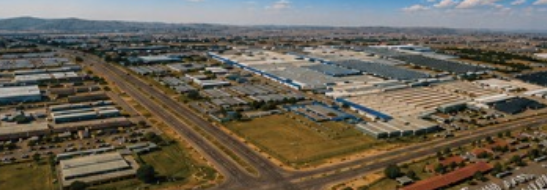
The announcement of investment initiatives valued at more than R120 billion in the Free State represents a significant milestone in government's efforts to advance industrialisation and unlock the economic potential of Special Economic Zones. Linked to the development ambitions of the Maluti-a-Phofung SEZ, these investments encompass renewable energy, electric vehicle manufacturing and agro-processing, including a proposed renewable energy project valued at approximately R100 billion, an automotive manufacturing investment estimated at R5.5 billion and an apple juice concentrate processing facility worth approximately R330 million.
Beyond the substantial financial commitments and anticipated employment opportunities, these investments have the potential to stimulate interconnected industries and strengthen local economic participation. Renewable energy development can increase demand for engineering expertise, electrical equipment and maintenance services, while electric vehicle manufacturing can support automotive component suppliers, logistics businesses and technical skills development.
Similarly, agro-processing can strengthen the relationship between agricultural production and manufacturing by creating opportunities for farmers, packaging enterprises and distributors to participate in expanding value chains. These linkages demonstrate how SEZs can evolve into integrated industrial ecosystems that generate economic opportunities beyond the boundaries of individual investment projects.
The Northern Cape is also emerging as an important contributor to South Africa’s industrialisation ambitions, particularly through investments that seek to unlock the economic value of the province’s mineral resources. Vedanta Zinc International’s Gamsberg Phase II expansion in the Khâi-Ma Local Municipality is expected to increase annual zinc-in-concentrate production capacity to approximately 500 000 tonnes and sustain between 800 and 1 000 operational jobs, with an emphasis on local recruitment. The broader economic significance of this investment lies in its potential to stimulate mineral beneficiation, manufacturing, logistics and enterprise development, while complementing the industrial development objectives associated with the Namakwa SEZ.
This potential extends to Limpopo, where the Fetakgomo-Tubatse SEZ has been established to position the region as a strategic industrial hub for mineral beneficiation, manufacturing, logistics, renewable energy and associated economic development. The zone has an investment pipeline of 46 companies valued at R52.6 billion, with 8 000 jobs projected in the short to medium term and 20 000 over 10 years.
Investor due diligence conducted through the Industrial Zones Programme in the province has confirmed investment of R10.1 billion from nine companies for the first phase of development, which is expected to create 1 250 direct employment opportunities. Beyond these investments, the Fetakgomo-Tubatse SEZ has the potential to change the trajectory of the Sekhukhune economy by advancing mineral processing and beneficiation, strengthening skills development and expanding economic opportunities for small, medium and micro enterprises (SMMEs).
These investments are consistent with the objectives of the Government-Business Partnership for Growth and Jobs, which seeks to place South Africa on a sustainable economic growth trajectory exceeding 3% annually and contribute towards the creation of one million additional jobs by 2030.
Through the development of strategic industrial infrastructure and the mobilisation of private sector investment, SEZs can play an important role in translating national economic priorities into practical opportunities within provinces and municipalities, particularly in sectors such as infrastructure, mining, agriculture and manufacturing.
The expansion of industrial activity must also be accompanied by deliberate investment in skills development to ensure that South Africans are adequately prepared to participate in emerging economic opportunities. The transition towards electric mobility, renewable energy technologies, advanced manufacturing, agro-processing and mineral beneficiation will require specialised technical and occupational capabilities that respond to the changing demands of industry.
Stronger partnerships between government, investors, Technical and Vocational Education and Training (TVET) colleges, universities and Sector Education and Training Authorities are therefore necessary to align training programmes with actual industry requirements and create pathways to employment, entrepreneurship and economic participation, particularly for young people, women and historically disadvantaged communities.
Ultimately, the success of South Africa’s industrialisation agenda must be assessed not only through the financial value of investment commitments but also through their contribution to expanding industrial production, strengthening domestic supply chains, increasing exports and improving the livelihoods of communities.
The investment developments associated with the Fetakgomo-Tubatse SEZ, Maluti-a-Phofung SEZ and Namakwa demonstrate the country's capacity to leverage its resources, infrastructure and industrial potential to build a more competitive, diversified and inclusive economy.
As government advances economic reforms and private-sector partnerships, SEZs must turn investment confidence into sustainable industrial growth, enterprise development and decent employment. Their contribution to South Africa’s long-term prosperity must be measured in economic benefits shared across communities.
*Maphori is the Economic Cluster Coordinator at the Government Communication and Information System.


